📚 Table of Contents
- Why Online Job Scams Continue to Increase
- Common Types of Fake Remote Work Offers
- Fake Data Entry Jobs
- Reshipping Scams
- Fake Virtual Assistant Jobs
- Pyramid and MLM Schemes
- Fake Interview Scams
- Biggest Warning Signs of Fake Remote Job Offers
- The Pay Sounds Far Too High
- You Are Hired Too Quickly
- The Employer Requests Payment
- Communication Feels Unprofessional
- There Is Little Information About the Company
- The Recruiter Requests Sensitive Information Early
- How to Verify a Remote Job Offer
- Research the Company Carefully
- Contact the Company Directly
- Search for Scam Reports
- Check Website Security
- Compare Job Listings on Trusted Platforms
- Best Ways to Stay Safe While Searching for Remote Jobs
- Use Trusted Remote Job Websites
- Create a Separate Job Search Email
- Avoid Clicking Unknown Links
- Never Send Money to Employers
- Protect Personal Documents
- Use Secure Communication Platforms
- Common Keywords Used in Fake Remote Job Ads
- How Social Media Job Scams Work
- Risks of Falling for Fake Remote Work Scams
- What to Do If You Encounter a Fake Job Offer
- Stop All Communication
- Report the Scam
- Change Your Passwords
- Monitor Financial Accounts
- Educate Others
- How Legitimate Remote Companies Usually Hire
- Industries That Commonly Offer Legitimate Remote Jobs
- Building a Safe and Successful Remote Career
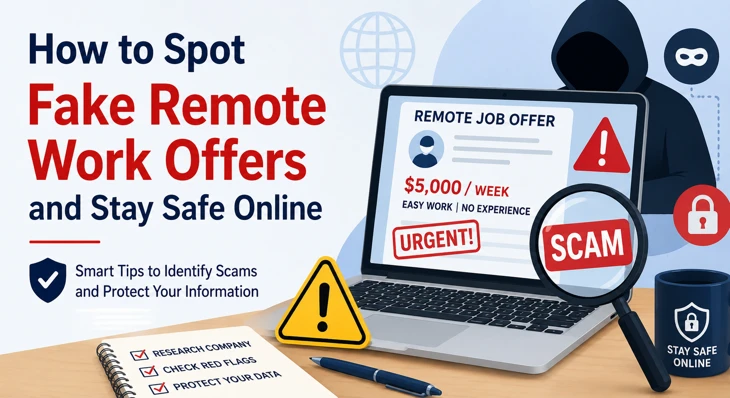
How to Spot Fake Remote Work Offers and Stay Safe Online
Remote jobs are no longer limited to tech companies or freelancers. Today, businesses across healthcare, education, finance, marketing, and customer support hire employees who work entirely online. For many professionals, remote work offers flexibility, better work-life balance, and access to opportunities that may not exist locally. But while genuine online jobs continue to grow, so do fake employment offers. Scammers know that thousands of people search for work-from-home opportunities every day. They exploit that demand by creating convincing job advertisements designed to steal money, personal data, or banking details. Some even copy real company names and logos to appear trustworthy. The problem has become especially common on social media platforms, messaging apps, and free job boards where fake recruiters can post anonymously. Many victims only realize they were targeted after sharing sensitive information or sending payments for fake training programs. Learning how to identify remote job scams before applying is one of the smartest ways to protect yourself online. Whether you are searching for part-time remote work, freelance projects, or a full-time online career, understanding the warning signs can help you avoid costly mistakes.Why Online Job Scams Continue to Increase
Remote hiring has become normal for businesses around the world. Companies now interview, train, and manage employees digitally, making it easier for scammers to impersonate real employers. Fraudsters often target:- First-time job seekers
- Freelancers looking for consistent work
- College students
- Stay-at-home parents
- Career changers
- People searching for quick income opportunities
Common Types of Fake Remote Work Offers
Understanding the most common remote work scams can help you avoid dangerous situations before they escalate.Fake Data Entry Jobs
Data entry scams are among the most common online job frauds. These fake employers promise high earnings for simple typing tasks with little or no experience required. Victims are often asked to:- Pay registration fees
- Purchase software packages
- Buy training materials
- Submit sensitive banking information
Reshipping Scams
In reshipping scams, workers are hired to receive packages at home and forward them to other destinations. The products are often purchased with stolen credit cards, thereby unknowingly involving participants in illegal activities.Fake Virtual Assistant Jobs
Some scammers pretend to hire virtual assistants and request access to personal financial accounts. Others ask workers to process payments or transfer funds, which can lead to financial fraud.Pyramid and MLM Schemes
Certain remote opportunities focus more on recruiting people than offering actual employment. These scams usually promise passive income but require upfront investments or membership fees.Fake Interview Scams
Some fraudsters conduct interviews entirely through messaging apps and offer jobs instantly without proper screening. Professional companies rarely hire candidates without structured interviews.Biggest Warning Signs of Fake Remote Job Offers
Most fake online job offers follow similar patterns. Paying attention to small details can help you avoid major problems later.The Pay Sounds Far Too High
Scammers often advertise unrealistic salaries to attract attention quickly. Examples may include:- Huge weekly income for basic typing work
- High-paying remote jobs with no qualifications required
- Easy online work with guaranteed earnings
- Daily payouts for simple tasks
You Are Hired Too Quickly
Real companies invest time in the hiring process. Professional employers normally:- Review resumes carefully
- Conduct interviews
- Discuss experience and responsibilities
- Explain expectations clearly
- Send official documentation
The Employer Requests Payment
This is one of the most common signs of a remote work scam. Fake employers may ask for money for:- Training materials
- Software access
- Security deposits
- Equipment purchases
- Background verification
Communication Feels Unprofessional
Many fraudulent job offers contain:- Grammar mistakes
- Generic greetings
- Poor formatting
- Vague job details
- Inconsistent information
There Is Little Information About the Company
Before applying for any online position, research the company thoroughly. Be cautious if the business:- Has no professional website
- Lacks employee profiles on LinkedIn
- Shows almost no online activity
- Uses copied website content
- Has only recently created social media accounts
The Recruiter Requests Sensitive Information Early
Scammers often attempt to collect personal details before any formal hiring process begins. Avoid sharing:- Banking information
- Government identification numbers
- Passport copies
- Credit card details
- Passwords or login credentials
How to Verify a Remote Job Offer
Learning how to check if a remote job is legitimate can help you avoid financial loss and identity theft.Research the Company Carefully
Search for:- Official website
- LinkedIn profiles
- Employee reviews
- News mentions
- Business registration details
Contact the Company Directly
If you receive a suspicious email from a recruiter, visit the official company website and contact the HR department directly. Confirm whether the recruiter actually works for the organization.Search for Scam Reports
Type the company name along with phrases like:- scam
- fake recruiter
- complaints
- fraud alert
Check Website Security
Legitimate company websites usually:- Use HTTPS security
- Include contact information
- Have privacy policies
- Display professional branding
Compare Job Listings on Trusted Platforms
Look for the same position on reputable websites such as:- Indeed
- FlexJobs
- Remote.co
- We Work Remotely
Best Ways to Stay Safe While Searching for Remote Jobs
Safe online job searching requires smart digital habits and careful decision-making.Use Trusted Remote Job Websites
Choose established job platforms that actively monitor and remove suspicious listings. Verified platforms reduce the risk of encountering fake employers.Create a Separate Job Search Email
Using a dedicated email address for applications helps protect your primary accounts from spam and phishing attacks.Avoid Clicking Unknown Links
Scammers frequently send malicious links disguised as:- Interview forms
- Employment contracts
- Online assessments
- Payroll documents
Never Send Money to Employers
Authentic remote companies do not require candidates to transfer money or purchase products before starting work.Protect Personal Documents
Only share identification documents after verifying the company’s legitimacy and receiving a formal offer.Use Secure Communication Platforms
Professional businesses usually conduct interviews using trusted tools such as:- Zoom
- Microsoft Teams
- Google Meet
Common Keywords Used in Fake Remote Job Ads
Scammers often use emotional and attention-grabbing phrases to quickly attract job seekers. Watch for excessive use of terms like:- Easy work from home jobs
- Instant hiring of remote jobs
- Daily payment online work
- No experience work from home jobs
- Guaranteed online income
- Quick money remote jobs
- Simple typing jobs from home
How Social Media Job Scams Work
Many fake recruiters operate through:- Facebook groups
- Telegram channels
- WhatsApp messages
- Instagram advertisements
- Fake LinkedIn profiles
- Recruiters avoid video calls
- Profiles were recently created
- Communication quickly moves to private messaging apps
- The recruiter has very few professional connections
Risks of Falling for Fake Remote Work Scams
Online job scams can lead to serious consequences beyond financial loss. Victims may experience:- Identity theft
- Banking fraud
- Credit score damage
- Emotional stress
- Malware attacks
- Career setbacks
What to Do If You Encounter a Fake Job Offer
If you suspect a remote work scam, take action immediately.Stop All Communication
Do not send additional information, documents, or payments.Report the Scam
You can report suspicious employers to:- Job boards
- Social media platforms
- Cybercrime agencies
- Consumer protection organizations
Change Your Passwords
If you clicked suspicious links or shared login information, update your passwords immediately. Enable two-factor authentication whenever possible.Monitor Financial Accounts
Watch your bank accounts and credit activity closely if financial information was shared. Contact your bank immediately if you notice unusual transactions.Educate Others
Sharing awareness about online job scams can help friends, family members, and colleagues avoid becoming victims.How Legitimate Remote Companies Usually Hire
Understanding professional hiring practices makes it easier to identify genuine opportunities. Authentic remote employers typically:- Publish detailed job descriptions
- Conduct structured interviews
- Use official company emails
- Provide written contracts
- Explain salary and benefits clearly
- Offer secure onboarding procedures
Industries That Commonly Offer Legitimate Remote Jobs
Several industries regularly provide genuine remote employment opportunities. Popular remote-friendly career fields include:- Content writing
- Software development
- Digital marketing
- Customer support
- Graphic design
- Virtual assistance
- Online education
- Project management