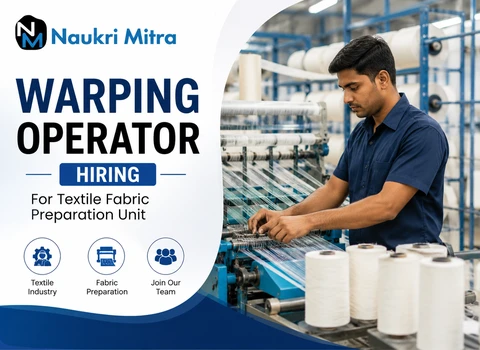
What a Warping Operator Actually Does Before Fabric Is Ever Woven
Long before a fabric takes shape on a loom, someone has to prepare the yarn so it runs evenly, without snapping or tangling. That job belongs to the warping operator. In a textile fabric preparation unit, this is one of the first hands-on stages of production, setting the tone for everything that follows. A unit based in Erode, Tamil Nadu, is currently hiring for this Full-time position, and it's a role that suits people who don't mind repetitive, detail-heavy work at a machine.
If yarn isn't wound onto the beam correctly, the problems don't stay small. They show up later as broken threads on the loom, patchy fabric texture, or slower output. So when a company hires for this post, they're really looking for someone who can catch small issues before they become big ones.
A Day on the Warping Floor
No two shifts look identical, but most days follow a similar shape. Yarn cones arrive at the creel and get checked for knots or uneven thickness. The machine is set up based on what fabric is being produced that day. Once it starts running, the real work is watching tension levels and jumping in the moment a thread breaks.
Other tasks that come up regularly:
- Loading and arranging yarn cones on the creel stand
- Adjusting tension settings for different yarn counts
- Splicing or re-tying threads that snap mid-process
- Checking the finished beam for evenness before it moves forward
- Logging output and flagging machine issues to a supervisor
Where This Kind of Work Happens
Erode and the surrounding parts of Tamil Nadu have a long-standing textile manufacturing presence, so demand for this role tends to stay fairly steady in the region. Most operators end up working in spinning-weaving units or fabric preparation plants, where warping is treated as its own dedicated department rather than a side task.
Equipment You'll Get Familiar With
Direct and sectional warping machines are the two main types used, and which one a plant runs depends on the fabric being produced. Around the machine, operators deal with creel stands holding dozens of yarn cones at once, tension controllers, and small hand tools for splicing broken threads. Measuring instruments also come into play, mainly for checking beam length and confirming that the yarn count matches the order specification.
Knowing how these machines behave under different conditions is what separates someone who just presses buttons from someone who can actually troubleshoot when things go wrong.
Who Tends to Do Well in This Role
An ITI qualification in textile technology helps, and so does a diploma in textile engineering, but plenty of units are open to freshers who show they can pick things up quickly. What matters more, honestly, is whether someone can spot a defect in a yarn cone at a glance or notice tension drifting before it causes a break.
A few traits that come up again and again among people who succeed here:
- Sharp eyesight, since defects are often subtle
- Quick hands for repairing threads without stopping the whole line
- Basic comfort with numbers, for reading yarn counts and specifications
- Patience — this isn't a job for someone who gets frustrated by repetition
What the Job Asks of You Physically
This is standing work. Operators move around the machine constantly through a shift, and since most textile units run in shifts, odd hours come with the territory for this Full-time position. The floor itself is noisy, and airborne lint is a constant presence, which is part of why the workplace takes protective gear seriously.
Staying Safe Around the Machine
Warping machines have fast-moving parts, so a few precautions become second nature fairly quickly:
- Gloves when handling yarn or adjusting machine components
- Dust masks to cut down on lint exposure over a full shift
- Proper footwear, since the floor near machinery can get slippery
- Tying back loose hair and avoiding loose clothing near rotating parts
None of this is complicated, but skipping it even once is where accidents tend to happen.
The Hard Parts Nobody Mentions Upfront
Thread breakage is what trips up most beginners. It happens constantly at first, and learning to fix it fast without slowing the whole beam takes real practice. Standing for hours at a stretch is tiring in the beginning too. Most people say it stops feeling difficult around the two- or three-month mark, once the movements become automatic.
What Actually Helps You Improve
Keeping the work area clean may seem minor, but it matters — a cluttered station slows thread repair. Flagging irregular machine sounds or tension drift to a supervisor early, rather than waiting, tends to prevent bigger stoppages. Operators who pay attention to these small habits usually move into more senior machine-handling roles or shift supervision faster than those who don't.
Pay and What Else Might Come With It
This position, based in Erode, Tamil Nadu, India, pays ₹29,400 a month on a Full-time basis. Beyond the fixed salary, some units offer extras like overtime pay, PF, ESI, an annual bonus, uniforms, transport, or canteen access — though none of these are standard across every employer, and it's worth confirming what's actually included before joining.
Should You Take This Path
If you're someone who'd rather learn a hands-on trade than sit through years of classroom training, this role offers a real way in. Freshers, ITI candidates, and diploma holders all have a reasonable shot here, and those who stick with it tend to build a genuinely useful, transferable skill set in the textile industry.