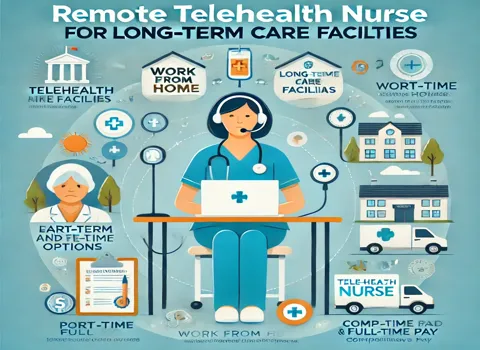
Telehealth Nurse for Long-Term Care Facilities
Let’s talk about a role that’s changing lives every single day. Imagine helping seniors manage their health without them even having to leave their homes. That’s precisely what you’ll do here. This is a remote role, but the impact you’ll make will reach long-term care facilities and families nationwide. With an annual salary of
$30,000, it’s not just a paycheck — it’s a purpose.
Why This Role Matters
We all know healthcare is shifting. Seniors often struggle to travel for appointments, especially those managing multiple conditions. That’s where
Telehealth Nurses for Long-Term Care Facilities step in. You’ll provide vital support through technology, ensuring care doesn’t stop at the clinic’s door.
Think about it: instead of a rushed hospital visit, seniors can connect with you for
virtual nursing support. Their families get peace of mind. And long-term care facilities gain a reliable partner who keeps everyone informed. This isn’t just about checking vitals — it’s about creating calm, consistent care.
A Day in the Life
Wondering what your day will look like? It’s not about sitting behind a screen all day with endless charts. It’s about conversations, problem-solving, and making life easier for people who need it most.
- You’ll jump on virtual health consultations with seniors and their families.
- You’ll monitor ongoing conditions through remote patient monitoring systems.
- You’ll guide long-term care staff on chronic disease management, helping them prevent issues before they escalate.
- You’ll document everything clearly using modern healthcare technology platforms.
And yes, some days will be busy. A resident may have a sudden change in blood pressure. Another might feel isolated and just want to talk. You’ll balance both medical expertise and human connection. In short, this is a
virtual nursing role where connection matters just as much as care.
The Skills That Make You Shine
This role isn’t just about credentials. It’s about heart, patience, and adaptability. Here’s what helps you thrive:
Clinical Expertise
- Strong background in nursing, especially in geriatric healthcare services.
- Confidence in handling emergencies — even remotely.
- Familiarity with telemedicine compliance standards.
Technology Comfort
- Comfort navigating healthcare technology platforms.
- Ability to troubleshoot minor technical issues seniors may encounter during digital visits.
Human Connection
- Warmth and empathy — because seniors want to feel heard, not rushed.
- Skills in elder care nursing expertise to build trust with patients and families.
- Patience when guiding staff through new telehealth care coordination tools.
Real Challenges You’ll Solve
We’re not going to sugarcoat it. Remote healthcare has its ups and downs. But that’s also what makes this role meaningful.
- Loneliness among seniors:
Sometimes, the only interaction a senior has all day is with you. That quick call might lift their whole mood.
- Confusion with new systems:
Not everyone grew up with apps and tablets. You’ll patiently walk residents and caregivers through it, step by step.
- Balancing long-term needs:
With your skills in long-term patient care planning, you’ll create routines that actually stick — reducing hospital readmissions over time.
Collaboration at Its Best
You won’t be doing this solo. You’ll be part of an
interdisciplinary healthcare team support system. That means physicians, dietitians, and physical therapists all play a role — and you’ll be the bridge that keeps communication flowing.
Picture this: A senior recovering from surgery needs both wound care and mobility exercises. You’ll coordinate the digital touchpoints between the nurse on-site and the remote physiotherapist. That’s teamwork in action — and in one recent case, facilities saw recovery times shorten by nearly a week when care was tightly coordinated across disciplines.
Growth and Learning
In healthcare, change is constant — and you’ll keep growing right alongside it. This role encourages continuous learning:
- Stay updated on digital health assessments tools.
- Sharpen your documentation skills with remote clinical documentation training.
- Learn how new healthcare technology platforms are shaping tomorrow’s care.
And yes, you’ll get support. Weekly team calls, resource sharing, and case studies help you grow. You’ll never feel overwhelmed.
What Success Looks Like
Success here isn’t about paperwork or charts. It’s about outcomes you can see and feel:
- A senior with diabetes maintains stable sugar levels thanks to your coaching.
- A family sleeps better knowing their parent has access to patient-centered care delivery anytime.
- A facility reduces unnecessary ER visits by 25% after you helped spot early warning signs through remote patient monitoring.
That’s what success looks like here — and you’ll see it in small, meaningful ways each week.
The Payoff Beyond Salary
Yes, the salary is
$30,000 annually. But here’s the bigger payoff:
- You’ll create real impact without the daily commute.
- You’ll join a team that celebrates small wins (we share stories in our weekly huddles — you’d love them).
- You’ll have the flexibility to balance life and work.
It’s the kind of role that makes logging in each morning feel worthwhile.
How You’ll Fit In
We understand — remote work can sometimes feel lonely. Here, we maintain connection with weekly team huddles and regular check-ins. We share stories: the resident who cracked a joke during a blood pressure check, or the family that sent a thank-you note after a tough week. These little things remind us why we show up.
You’ll fit in if you’re someone who loves solving real problems, doesn’t mind learning new tools, and values human connection as much as clinical care.
What We’d Love to See
Here’s what helps you hit the ground running:
- Registered Nurse (RN) license or equivalent.
- Experience in senior care telemedicine or related fields.
- Comfort with both structured protocols and unexpected patient needs.
- Willingness to adapt and keep learning.
Ready to Step Up?
This is more than a remote nursing role. It’s an opportunity to transform the way seniors receive care. If you’re passionate about blending medical expertise with human connection, this is the space for you.
Your work as a
Telehealth Nurse for Long-Term Care Facilities will shape lives — not just patients, but families and entire communities. This remote nursing role is one where your care and dedication make a lasting difference.
Final Note: Imagine ending your week knowing you helped someone feel safe, cared for, and less alone. That’s the difference you’ll make here. If that excites you, let’s get started.