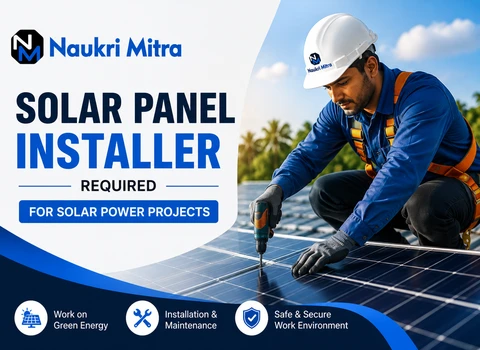
What Does a Solar Panel Installer Actually Do?
Someone has to physically put the panels on the roof. That's the short version of this job. A Solar Panel Installer is hired to install solar panels on rooftops, ground-mounted structures, or industrial sheds, wire them up correctly, and ensure the whole setup runs safely once it's live. Right now there's an opening for this role in Ahmedabad, Gujarat — full-time, paying ₹34,000 a month. It's a hands-on trade, and it's one of the more visible jobs in India's growing renewable energy push.
Why This Trade Is in Demand Right Now
Gujarat gets plenty of sun through most of the year, which is one reason solar adoption has grown quickly here. Housing societies want lower electricity bills. Factories want to cut running costs. Even government buildings are adding rooftop solar. All of that translates into installation work that someone has to do on-site, panel by panel. You can't outsource that part — a person still needs to climb up, fix the frame, run the cable, and check the connection. That's why the demand for installers hasn't slowed down.
A Day That Rarely Looks the Same Twice
Ask ten installers what their day looks like, and you'll get ten slightly different answers, but a few things tend to repeat. Mornings usually start with checking the site plan and unloading materials. Then comes the physical part — carrying panels, fixing mounting frames, adjusting the tilt angle so the panels catch maximum sunlight through the day.
Once the frames are up, the wiring begins. Cables get run to junction boxes and inverters, usually under a senior technician's watch if you're newer to the job. Before wrapping up, most installers walk back through their own work — checking for loose screws, exposed wires, or a panel that isn't sitting quite level.
The Work Beyond Just "Fixing Panels"
People sometimes assume this job is only about lifting and screwing panels into place. There's more to it. You're expected to read basic layout drawings, follow the wiring order the electrical team gives you, and speak up if something on the roof looks structurally off before installation starts. A panel that's a few degrees misaligned, or a connector that's not crimped properly, can quietly reduce how much power the whole system produces — so the small details matter more than they look like they should.
Where Installers Spend Their Working Hours
In and around Ahmedabad, this work takes place on residential rooftops, commercial buildings, warehouses, small manufacturing units, and sometimes on open-ground solar setups. A home installation might take a day or two. A commercial rooftop job can stretch on for weeks with a bigger crew. No two rooftops are built the same way either, so installers end up adjusting their approach site to site rather than following one fixed routine.
Tools You'll Have in Your Hands
The toolkit for this job is fairly practical — nothing exotic, but you need to know how to use each item properly.
- Spanners, wrenches, and screwdrivers for the mounting structure
- Drilling machines to fix frames onto rooftops or walls
- Cable cutters, crimping tools, and MC4 connectors for the wiring
- A spirit level, so panels sit at the right angle instead of by guesswork
- A multimeter for basic voltage and continuity checks
- Safety harnesses and ladders for getting up and staying secure
What Separates a Good Installer From an Average One
Technical knowledge helps, but it's not the whole picture. Comfort with heights matters more than people expect — some candidates realize on day one that rooftop work isn't for them. Beyond that, useful skills include a working understanding of basic wiring, the ability to follow an installation diagram without hand-holding, and a habit of double-checking your own connections rather than assuming they're fine.
ITI candidates from electrical or wireman trades tend to pick this up faster, since much of the wiring logic is already familiar to them. That said, motivated freshers do learn this on the job — most companies aren't expecting a finished expert on day one.
The Physical Side Nobody Mentions in Interviews
This isn't a desk job, and it shouldn't be treated like one when you're deciding if it's right for you. Expect long hours on your feet, climbing, bending, and carrying panels that are awkward to hold even when they're not particularly heavy. Most of the work happens outdoors in direct sunlight, so staying hydrated and pacing yourself throughout the day isn't optional — it's part of doing the job well. Shifts generally follow daylight hours, since solar installations depend on visibility and aren't something you rush after dark.
Safety Isn't a Formality Here
Working at height with live electrical components is genuinely risky if shortcuts are taken. Installers are expected to wear a safety harness, helmet, non-slip footwear, and gloves as standard. Before climbing onto any roof, checking that the ladder or scaffold is stable — and confirming the power supply is switched off before touching wiring — isn't extra caution. It's the baseline.
What Makes the Job Harder Some Days
Weather doesn't always cooperate, and rooftops don't come with instruction manuals. An installer might reach a site expecting a straightforward layout and find the roof pitch or existing structure needs a different mounting approach altogether. Coordinating with other trades working on the same site at the same time adds another layer to manage. None of this is unusual for the trade — it's just part of what the job actually involves day to day.
Where This Can Lead Over Time
Most installers start out handling the physical setup and gradually take on more — wiring, testing, and eventually commissioning inverters. With a few years of experience and a clean safety record, some move into supervising a site crew or leading a small team. As solar projects keep multiplying across Gujarat and the rest of India, installers who build up real technical depth tend to find steady openings for growth within the same field, without needing to switch trades entirely.
Pay and What Might Come With It
This role in Ahmedabad, Gujarat is full-time and pays ₹34,000 per month. Beyond the base salary, some employers may offer extras like overtime pay, PF, ESI coverage, uniforms, or transport and canteen facilities — though these depend on the individual company and shouldn't be assumed as guaranteed.
Deciding If This Trade Fits You
If you don't mind working outdoors, can handle physical work without losing focus on the details, and want a foothold in India's expanding solar sector, this is a reasonable place to start. It works for freshers willing to learn on-site, ITI-trained candidates ready to put their training to use, and experienced professionals looking for stable, full-time work in Ahmedabad's growing solar installation sector.