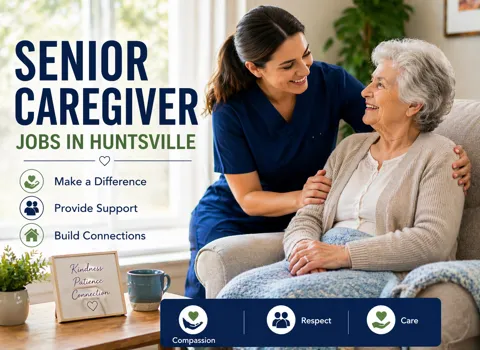
Senior Caregiver Roles in Huntsville – Compassionate Home Care Support
Position Snapshot
There’s a certain kind of work that doesn’t feel loud or fast-paced, but it carries a deep sense of purpose. Senior caregiver roles in Huntsville sit right in that space. It’s work built around presence—showing up for someone who depends on familiarity, patience, and steady support to get through their day with comfort and dignity.
At $50,000 per year, this role reflects more than just employment. It represents trust placed in someone who steps into private homes and becomes part of a person’s everyday rhythm. Some days are structured, others are unpredictable, but what remains constant is the need for calm, reliable care.
This position sits within the broader world of in-home senior care, where small actions carry real weight. A reminder given at the right time, a meal prepared with care, or simply sitting beside someone during a quiet afternoon can completely shift how their day feels.
How Your Work Supports the Team
The impact of this role is often felt in the background rather than on display. Families rely on consistent home care assistance to keep their loved ones safe, supported, and emotionally grounded.
Your presence helps reduce the pressure on family members who may be managing work, distance, or emotional stress. In many homes, caregivers become the steady link between independence and support—helping seniors continue living in familiar surroundings rather than transitioning to more restrictive environments.
Beyond tasks, what you provide is reassurance. When families know someone is truly paying attention, it changes how they experience daily life. That sense of relief is one of the most meaningful outcomes of this work.
A Closer Look at Daily Tasks
No two days follow an identical pattern, but a natural flow develops over time.
Mornings often begin with helping clients ease into the day. That might mean supporting personal care routines, preparing breakfast, or simply offering a calm presence while they wake up and adjust. These early moments often set the tone for everything that follows.
As the day progresses, responsibilities shift between practical and personal support. Medication reminders, mobility assistance, light housekeeping, and general health monitoring are part of the rhythm. But just as important are the quieter moments—conversations, shared silence, or simply being available when needed.
For individuals receiving dementia care support, structure becomes especially important. Familiar routines, gentle repetition, and patient communication help reduce confusion and create a sense of stability in their environment.
Capabilities That Help You Excel
Success in this role is less about formal titles and more about how you handle real human situations.
Experience in elderly care, home health support, or assisted living environments can certainly help, especially in understanding personal care routines and safety awareness. Skills like mobility support, hygiene assistance, and basic health observation are valuable in day-to-day work.
What truly makes a difference, though, is how you respond to people. Staying calm when situations become challenging, adjusting your pace when needed, and recognizing when someone simply needs reassurance rather than instruction all play a major role.
Clear communication, emotional awareness, and consistency often matter just as much as technical ability.
Work Structure and Rhythm
This role takes place in real homes, so the environment varies from one client to another. Each household comes with its own expectations, routines, and comfort levels.
Some clients prefer a quiet, structured environment with minimal disruption, while others enjoy conversation and interaction throughout the day. Being able to adjust your approach without losing consistency is an important part of the job.
While much of the work is independent, ongoing coordination with family members and care professionals is needed. Updates, observations, and communication help ensure that care remains aligned and responsive.
The rhythm of the job is steady rather than rushed, shaped by the needs of the people you support.
Platforms and Methods Involved
The tools used in this role are practical and designed to support consistency in care.
Medication reminder systems help maintain accurate schedules, especially when multiple prescriptions are involved. Mobility aids support safe movement around the home, while basic health-monitoring tools help track overall well-being.
Documentation—whether digital logs or written notes—plays a key role in maintaining continuity. It helps ensure that changes in behavior, health, or routine are clearly communicated across caregivers and family members.
Communication systems also help connect everyone involved in the care process, making coordination smoother and more reliable.
Example of Work in Motion
A typical afternoon might involve visiting a client who has recently become more forgetful. When you arrive, they may be uncertain about whether they’ve eaten or taken their medication.
Instead of rushing to correct everything, you gently guide them through familiar steps. You prepare a light meal together, using simple cues that help them stay oriented without feeling overwhelmed.
Later, they might become frustrated trying to recall something important. Rather than pushing for answers, you shift the moment—maybe by starting a familiar conversation or introducing a calming activity.
By the end of the visit, the environment feels more settled. The client feels supported rather than corrected, and their family receives an update that reflects stability and care rather than concern.
These small, thoughtful adjustments are what define the role in practice.
Who This Role Is Best Suited For
This opportunity suits people who are naturally steady in their approach to others and situations.
It suits individuals who are comfortable working closely with seniors in private settings and who understand the importance of respect, patience, and consistency. You don’t need to be overly formal, but you do need to be dependable and attentive.
Those who find satisfaction in helping others maintain independence while offering quiet support tend to do well here. Emotional balance and the ability to stay grounded during unpredictable moments are also important traits.
Ready to Take the Next Step?
Senior caregiver roles in Huntsville offer more than structured work—they offer the chance to make daily life easier and more meaningful for people who truly depend on support.
Each visit, each conversation, and each routine you help maintain contributes to someone’s sense of stability and dignity. Over time, the role becomes less about tasks and more about trust built through consistency.
For someone seeking work that feels grounded, human, and genuinely impactful, this path offers both purpose and long-term value.