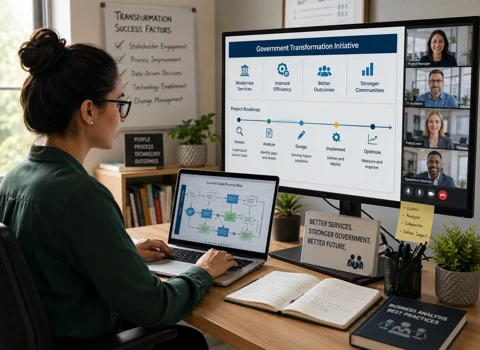
Driving Public Sector Change Through Data and Strategy
Organizations across the public sector are under increasing pressure to modernize services, improve efficiency, and deliver better outcomes for citizens. A Required Business Analyst for the Government Transformation Initiative plays a central role in helping government agencies achieve these goals. This professional bridges the gap between policy objectives, operational needs, technology solutions, and stakeholder expectations.
For individuals interested in business analysis, public-sector improvement, and large-scale organizational change, this role offers an opportunity to influence meaningful transformation projects while
working remotely.
Why Government Transformation Programs Need Business Analysts
Government transformation initiatives often involve redesigning outdated processes, introducing digital services, improving citizen experiences, and increasing operational efficiency. These projects require professionals who can evaluate existing systems, identify challenges, and recommend practical improvements.
A Required Business Analyst for the Government Transformation Initiative helps agencies understand what needs to change and how those changes can be implemented successfully.
Typical goals may include:
- Modernizing legacy systems
- Streamlining administrative processes
- Improving service delivery
- Enhancing data management practices
- Supporting digital transformation efforts
- Reducing operational costs
- Increasing transparency and accountability
Without skilled business analysts, transformation programs may struggle to align business needs with technical solutions.
Understanding the Scope of the Position
Business analysts working on government transformation projects operate at the intersection of strategy, operations, technology, and public policy.
Their primary responsibility is to analyze business processes, gather stakeholder requirements, document findings, and support the implementation of improvements.
Unlike analysts in purely commercial environments, government-focused professionals often work with multiple departments, regulatory requirements, public service objectives, and complex stakeholder groups.
This makes communication and organizational skills especially valuable.
What Makes Public Sector Analysis Different?
Government organizations often face unique challenges, including:
- Strict compliance requirements
- Budget constraints
- Legacy technology infrastructure
- Multiple approval layers
- Public accountability standards
- Diverse stakeholder interests
A successful analyst must understand how to balance operational efficiency with regulatory and policy obligations.
Typical Projects You May Work On
The work can vary significantly depending on the transformation initiative.
Examples include:
- Digital service modernization
- Citizen portal implementation
- Data governance programs
- Financial system upgrades
- Human resource transformation projects
- Public health system improvements
- Infrastructure management modernization
- Workflow automation initiatives
One project may involve documenting requirements for a new online permit application system, while another may focus on redesigning internal government workflows.
How a Typical Workday Might Look
A Required Business Analyst for Government Transformation Initiative often spends the day coordinating with stakeholders, reviewing data, and supporting project activities.
Daily responsibilities may include:
- Conducting stakeholder interviews
- Facilitating workshops
- Reviewing business processes
- Analyzing operational data
- Creating process maps
- Writing business requirement documents
- Identifying risks and opportunities
- Supporting testing activities
- Participating in project meetings
- Monitoring implementation progress
Remote work frequently involves virtual collaboration sessions with government leaders, project managers, technical teams, and external consultants.
Balancing Strategic and Operational Tasks
One of the most interesting aspects of this profession is the balance between big-picture planning and detailed analysis.
An analyst may spend the morning discussing long-term transformation goals with senior leadership and the afternoon documenting specific workflow requirements for developers.
This variety keeps the role engaging and intellectually challenging.
Skills That Help Professionals Thrive in This Role
Business analysis combines analytical thinking, communication, and problem-solving.
The most successful professionals typically demonstrate strengths in several areas.
Analytical and Critical Thinking
Transformation initiatives generate large amounts of information. Analysts must evaluate data, identify patterns, and develop actionable recommendations.
Important analytical abilities include:
- Root cause analysis
- Process evaluation
- Gap analysis
- Requirements analysis
- Data interpretation
- Risk assessment
Communication and Stakeholder Engagement
Government projects involve numerous stakeholders with different priorities.
Strong communication skills help analysts:
- Gather accurate requirements
- Build consensus
- Present recommendations clearly
- Facilitate discussions
- Resolve misunderstandings
Written communication is equally important because much of the role involves documentation.
Organizational and Project Awareness
While business analysts are not always project managers, they work closely with project teams.
Helpful competencies include:
- Time management
- Documentation control
- Meeting facilitation
- Change management awareness
- Prioritization skills
Educational Background and Professional Qualifications
Many employers seek candidates with a bachelor's degree in areas such as:
- Business Administration
- Public Administration
- Information Systems
- Economics
- Finance
- Political Science
- Management
- Computer Science
However, practical experience often carries significant weight, particularly for professionals with a proven history of supporting transformation programs.
Certifications That May Strengthen Your Profile
Several certifications can improve career prospects and demonstrate expertise.
Popular options include:
- Certified Business Analysis Professional (CBAP)
- Entry Certificate in Business Analysis (ECBA)
- Certification of Capability in Business Analysis (CCBA)
- Agile Analysis Certification (AAC)
- PRINCE2 Foundation
- Project Management Professional (PMP)
- Lean Six Sigma Certifications
Government agencies and consulting firms often view these credentials favorably.
Technology and Platforms Commonly Used
A Required Business Analyst for the Government Transformation Initiative frequently uses a combination of business, collaboration, and project management tools.
Common platforms include:
- Microsoft Excel
- Microsoft Power BI
- Microsoft Teams
- SharePoint
- Jira
- Confluence
- Visio
- Lucidchart
- Tableau
- Azure DevOps
Why Data Visualization Skills Matter
Modern transformation initiatives increasingly rely on data-driven decision-making.
Analysts who can transform complex information into clear visual insights often provide greater value to project teams and leadership groups.
Dashboards, process maps, and reporting tools help communicate findings more effectively.
Common Challenges in Government Transformation Work
Large-scale public sector projects can be highly rewarding, but they also present unique obstacles.
Professionals may encounter:
- Conflicting stakeholder priorities
- Evolving project requirements
- Resistance to organizational change
- Complex approval processes
- Legacy technology limitations
- Resource constraints
- Regulatory considerations
Successfully navigating these challenges requires patience, adaptability, and strong relationship-building skills.
Managing Change Effectively
One of the most important responsibilities is helping stakeholders adapt to new ways of working.
Business analysts often support change management efforts by:
- Explaining project objectives
- Addressing concerns
- Gathering feedback
- Documenting impacts
- Supporting training initiatives
Organizations frequently rely on analysts to ensure that transformation efforts gain stakeholder acceptance.
Remote Work Expectations for This Profession
Remote opportunities have become increasingly common for business analysts, especially on digital transformation projects.
A remote Required Business Analyst for the Government Transformation Initiative typically works from a home office while collaborating virtually with distributed teams.
Important remote work capabilities include:
- Self-management
- Virtual meeting facilitation
- Digital collaboration
- Remote stakeholder engagement
- Online workshop delivery
- Independent problem-solving
Because government projects often involve multiple agencies and external partners, remote collaboration skills are highly valuable.
Industries and Organizations That Hire Business Analysts for Transformation Programs
Although this role focuses on government initiatives, similar opportunities exist across multiple sectors.
Potential employers include:
- Federal government agencies
- State government departments
- Local government organizations
- Public sector consulting firms
- Technology consulting companies
- Healthcare organizations
- Transportation authorities
- Educational institutions
- Nonprofit organizations
- Infrastructure agencies
Many consulting firms also place analysts on government modernization projects for extended periods.
Who Is Best Suited for This Career Path?
This profession is often a strong fit for individuals who enjoy solving problems, improving systems, and working with diverse stakeholders.
People who thrive in this environment typically enjoy:
- Investigating operational challenges
- Working with data
- Facilitating discussions
- Building relationships
- Organizing information
- Supporting strategic initiatives
- Learning new technologies
Those who appreciate both analytical work and human interaction often find business analysis particularly rewarding.
Opportunities for Long-Term Career Advancement
Experience gained through government transformation initiatives can open doors to numerous leadership and specialist positions.
Potential advancement paths include:
- Senior Business Analyst
- Lead Business Analyst
- Business Analysis Manager
- Program Manager
- Transformation Manager
- Change Manager
- Product Owner
- Strategy Consultant
- Enterprise Analyst
- Digital Transformation Director
The skills developed in this profession are transferable across industries and remain in demand as organizations continue pursuing modernization efforts.
Building Expertise Over Time
Professionals who continuously improve their analytical capabilities, technical knowledge, and stakeholder management skills often progress into highly influential positions.
Exposure to complex transformation programs provides valuable experience in strategy execution, organizational change, and business improvement.
For job seekers interested in helping government agencies modernize operations, improve citizen services, and implement meaningful change, the Required Business Analyst for Government Transformation Initiative offers a challenging and impactful career path. With a competitive rate of $60 per hour, remote flexibility, and opportunities to contribute to large-scale public sector improvements, this role combines analytical expertise with real-world outcomes that can affect entire communities.