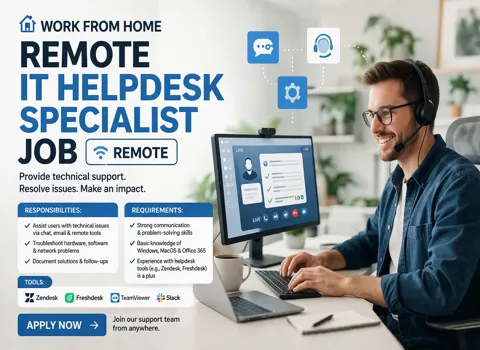
Remote IT Helpdesk Specialist: Work From Anywhere
Behind every seamless digital experience—every time you log in without a hitch or a system just works—there’s a dedicated professional making it happen. That’s where this role comes in. As a Remote IT Helpdesk Specialist, you’ll be the go-to expert for people who count on technology every day to stay productive, solve problems, and stay connected. When tech hiccups threaten to slow things down, you’re the one who gets things back on track—quickly turning headaches into relief.
With a competitive annual salary of $65,000, this isn’t just a stable career move—it’s your chance to be a trusted technical partner for teams, no matter where they’re working from.
Role Overview
This job is all about keeping technology accessible, responsive, and reliable for a distributed workforce. You’ll combine hands-on technical troubleshooting with genuine human connection, making sure employees and clients feel fully supported—wherever work takes them.
You won’t just close helpdesk tickets—you’ll dig into root causes, work to prevent issues from recurring, and always look for ways to make the overall IT support experience smoother. The goal? To create an environment where people can do their best work without tech getting in the way.
What This Role Contributes
A smooth-running helpdesk might not always be seen, but its positive impact is felt across the company. In this role, you’ll help make sure:
- Teams remain productive with minimal downtime
- Technical issues are resolved quickly and clearly explained
- Systems operate securely and efficiently across remote environments
- Employees feel confident using digital tools and platforms
By offering remote IT support that’s both reliable and approachable, you shape a positive workday for everyone. Every issue you solve builds trust and shows the company’s commitment to keeping things running smoothly.
Day-to-Day Work
No two days are quite the same. Some problems will be routine, while others will challenge you to think on your feet and get creative with solutions.
Typical activities include:
- Replying to helpdesk tickets and real-time support requests from remote users
- Troubleshooting hardware, software, and network connectivity issues as they arise
- Walking users through step-by-step solutions, always with clarity and patience
- Escalating tricky problems when needed—but always owning the outcome to see issues through
- Keeping an eye out for recurring problems and suggesting improvements to prevent them from coming back
This work keeps you on your toes, blending technical know-how with the ability to communicate clearly with people who aren’t always tech-savvy.
Skills That Help You Succeed
To really thrive here, you’ll need both solid technical chops and a knack for great service. People who succeed in this role usually have:
- Experience with IT troubleshooting on different operating systems and software applications
- Comfort working with remote desktop support and ticketing systems
- The ability to explain technical stuff in a way anyone can understand
- A proactive mindset for finding and fixing recurring issues before they become big problems
- Strong time management so you can juggle multiple requests without missing a beat
Patience is just as important. Staying calm and focused, especially when things get hectic, helps you earn trust and deliver a great support experience.
How Work Happens in This Remote Role
Working from home means staying organized, being self-motivated, and keeping communication clear and consistent. You’ll be part of a distributed team that collaborates using digital tools and channels.
On a typical day, you might find yourself:
- Logging into a helpdesk system to track, respond to, and resolve support tickets
- Joining virtual check-ins or team meetings to stay aligned
- Documenting solutions to grow a shared knowledge base that everyone on the team can use
- Staying available and responsive via chat, email, or video support as needed
Remote work gives you the freedom to work independently, but you’ll always have the backing of a connected team. Clear documentation and open communication help make sure nothing slips through the cracks.
Tools or Methods Used in the Work
To keep things running smoothly and efficiently, you’ll use a variety of up-to-date tools and processes, including:
- Ticketing systems like ServiceNow or Zendesk to keep track of and resolve issues efficiently
- Remote access tools for hands-on, real-time troubleshooting, no matter where users are located
- Knowledge base platforms to document solutions and share best practices across the team
- Collaboration tools such as Slack and Microsoft Teams for easy, real-time team communication
- System monitoring tools to spot potential issues early and prevent disruptions
Being comfortable with these tools means you’ll resolve problems faster and help keep IT service management top-notch.
A Realistic Scenario
Let’s say it’s mid-morning and a remote employee suddenly can’t get into a critical application—right before a big client meeting. At first glance, it looks like a quick fix, but the standard troubleshooting steps don’t work.
Instead of settling for a quick workaround, you dig deeper. You check recent system updates, review permissions, and discover a conflict caused by a new software patch. In just a few minutes, you restore access and save the day.
Even more important, you document everything and share the fix with your team—so next time, no one gets stuck. What could have been a stressful setback turns into a smooth recovery and a win for everyone.
Who Thrives in This Role
This job is perfect for people who love solving problems and enjoy helping others shine. Folks who thrive here tend to:
- Take pride in fixing issues quickly and thoroughly
- Stay curious about the latest technology and new systems
- Communicate clearly and with empathy
- Work well on your own, but also value staying connected with your team
- Get satisfaction from making processes better—not just fixing what’s broken
Having a strong sense of responsibility and ownership goes a long way—especially in a remote environment where accountability really matters.
Closing Message
Technology is at the heart of how modern teams get things done. And behind every reliable system, there’s someone making sure it all works. As a Remote IT Helpdesk Specialist, you’ll have the chance to make a real impact every day—supporting people, strengthening systems, and helping create a seamless digital workplace.
If you’re passionate about solving problems, building connections, and always looking for ways to improve, this remote IT helpdesk specialist job is your opportunity to grow—and make a real difference—no matter where you work from.