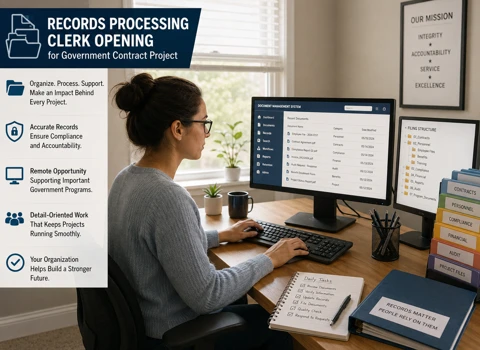
Exploring the Records Processing Clerk Opening for the Government Contract Project
A
Records Processing Clerk Opening for a Government Contract Project focuses on maintaining the documents and information that keep government-funded programs running smoothly. People in this role review records, organize files, update databases, and ensure documents are stored correctly so they can be retrieved quickly when needed.
Government contracts often involve large amounts of paperwork and digital documentation. These records may include employee files, contract documents, compliance reports, financial records, and project-related materials. Keeping everything organized is essential, and that responsibility often falls to records processing professionals.
This
remote position offers a pay rate of
$24 per hour and may appeal to individuals who enjoy detail-oriented administrative work and structured daily tasks.
Why Accurate Records Matter on Government Contract Projects
Government agencies and their contractors are required to maintain thorough documentation. Records serve many purposes, including tracking project activities, demonstrating compliance, supporting audits, and documenting financial transactions.
Records processing clerks help organizations:
- Maintain organized filing systems
- Ensure records remain current
- Support compliance requirements
- Assist with audits and reviews
- Safeguard confidential information
- Reduce administrative errors
- Improve document accessibility
When records are missing, outdated, or difficult to locate, projects can experience delays and unnecessary complications. Effective records management helps prevent those problems.
Supporting Teams Behind the Scenes
Although records processing clerks may not interact directly with the public, their work supports many departments across a government contract project.
Responsibilities commonly include:
- Reviewing incoming forms and documentation
- Identifying missing or incomplete information
- Entering data into approved systems
- Updating electronic filing structures
- Locating records for authorized staff
- Following retention and storage guidelines
- Preparing files for audits or internal reviews
Well-maintained records allow managers, auditors, and project teams to access reliable information when making decisions.
What a Typical Remote Workday Involves
Most of the work takes place within digital systems. Employees generally follow established procedures and work through assigned tasks according to project priorities.
Daily activities may include:
- Logging into secure systems
- Reviewing newly submitted documents
- Verifying information for accuracy
- Updating databases and records
- Organizing electronic files
- Responding to document requests
- Monitoring assigned workloads
- Performing quality checks
- Following security and privacy requirements
Because the role is remote, communication usually occurs via email, virtual meetings, messaging platforms, and collaboration tools.
Types of Records Commonly Processed
The specific documents handled depend on the agency, department, or contract. However, records processing clerks often work with a broad range of information.
Examples include:
- Personnel and employment records
- Benefits documentation
- Licensing and certification records
- Regulatory and compliance reports
- Procurement documents
- Contract files
- Financial records
- Case-related paperwork
- Program applications
- Audit support documents
Understanding how records should be categorized, stored, and retained is an important part of the position.
Attention to Detail Is Essential
Accuracy is one of the most valuable qualities in records processing. Even a small mistake can create issues later when information is needed for reporting, compliance reviews, or project evaluations.
For instance, entering incorrect information or filing a document in the wrong location can make retrieval difficult and slow down important processes.
Many successful clerks develop habits such as:
- Reviewing completed work carefully
- Following established procedures
- Comparing entries against source documents
- Keeping filing systems organized
- Tracking incomplete records
- Conducting regular quality reviews
Employers often place a high value on precision because accurate records support the success of the entire project.
Technology Used in Modern Records Management
Most organizations now rely on electronic records rather than traditional paper filing systems. As a result, basic computer proficiency is an important requirement for this role.
Helpful technical skills include:
- Data entry
- Electronic filing
- Database navigation
- Document tracking
- Microsoft Word
- Microsoft Excel
- Microsoft Outlook
- PDF editing tools
- Records management software
- Cloud-based collaboration platforms
While project-specific training is often provided, candidates who are comfortable learning new systems typically adapt more quickly.
Software Platforms You May Encounter
Government contractors frequently use specialized applications designed to manage records securely and efficiently.
Examples include:
- Electronic Document Management Systems (EDMS)
- Enterprise Content Management platforms
- Microsoft SharePoint
- Secure document repositories
- Workflow and records tracking software
Experience with these tools can be beneficial, though many employers provide training after hire.
Characteristics of Successful Records Processing Clerks
Technical knowledge is important, but personal work habits often determine long-term success in the role.
Employers commonly look for individuals who demonstrate:
- Strong organizational skills
- Dependability
- Careful attention to detail
- Professional judgment
- Respect for confidentiality
- Clear communication
- Adaptability
- Effective time management
- Consistent performance
Government contract environments often require employees to follow detailed procedures, making reliability especially important.
Education and Training Expectations
Many employers consider candidates with a high school diploma or equivalent. Previous experience in administrative support, records management, or office operations can also be helpful.
Relevant educational backgrounds may include:
- Business administration
- Public administration
- Information management
- Office administration
- Records management
- Administrative support studies
Although a college degree is not always required, coursework related to databases, documentation practices, or information systems may strengthen a candidate's qualifications.
Certifications That May Be Beneficial
Certifications are usually optional, but they can demonstrate additional knowledge and commitment to professional growth.
Examples include:
- Records management certifications
- Administrative professional certifications
- Information governance training
- Data privacy and compliance courses
- Document control certifications
Additional training may also support advancement into more specialized positions.
Common Challenges in the Position
Records processing requires concentration, consistency, and the ability to manage multiple priorities.
Employees may encounter challenges such as:
- Handling large volumes of documents
- Meeting processing deadlines
- Learning detailed filing requirements
- Adjusting to procedural changes
- Protecting confidential information
- Working across multiple software systems
- Staying productive in a remote environment
Strong organizational habits and careful planning can help employees manage these responsibilities effectively.
Industries That Value Records Processing Skills
Although this opportunity is tied to a government contract project, records management skills are useful in many industries.
Organizations that frequently hire records professionals include:
- Government agencies
- Federal contractors
- Healthcare organizations
- Educational institutions
- Legal offices
- Insurance providers
- Financial services companies
- Utility companies
- Nonprofit organizations
Because accurate documentation is important across many sectors, experience in records processing can open doors to a variety of career opportunities.
Who May Enjoy This Type of Work?
A
Records Processing Clerk Opening for a Government Contract Project is often a strong fit for individuals who prefer organized, process-driven work.
People who tend to perform well in this role often:
- Enjoy working with detailed information
- Follow procedures carefully
- Like organizing documents and data
- Work independently with minimal supervision
- Stay focused on repetitive tasks
- Feel comfortable using technology
- Understand the importance of confidentiality
Those who take pride in maintaining order and accuracy often find the work satisfying.
Remote Work and Information Security
Working remotely with government-related records requires a strong commitment to security and privacy.
Successful remote employees typically:
- Use a dedicated workspace
- Protect passwords and devices
- Follow security policies closely
- Keep digital files organized
- Communicate regularly with team members
- Monitor deadlines and assignments
- Prevent unauthorized access to sensitive information
Maintaining secure work practices is critical to supporting government contract operations.
Potential Career Growth Opportunities
Experience gained through a
Records Processing Clerk Opening for a Government Contract Project can lead to a variety of administrative and information management roles.
Possible career paths include:
- Senior Records Clerk
- Records Coordinator
- Document Control Specialist
- Compliance Administrator
- Records Analyst
- Information Management Specialist
- Administrative Supervisor
- Records Manager
- Information Governance Specialist
As organizations continue expanding digital records programs, professionals with strong documentation and compliance skills may find opportunities to move into higher-level positions.
Building a Foundation for Future Administrative Careers
The
Records Processing Clerk Opening for Government Contract Project provides practical experience in records administration, document control, compliance support, and information organization. Employees help ensure that important records remain accurate, secure, and accessible throughout the life of a government project.
For individuals seeking remote administrative work, this role offers an opportunity to develop skills that are useful across many industries. Experience with records management, attention to detail, and strong organizational abilities can provide a solid foundation for future career advancement.