A Closer Look at the Opening for Content Verification Specialist in a Government Project
The
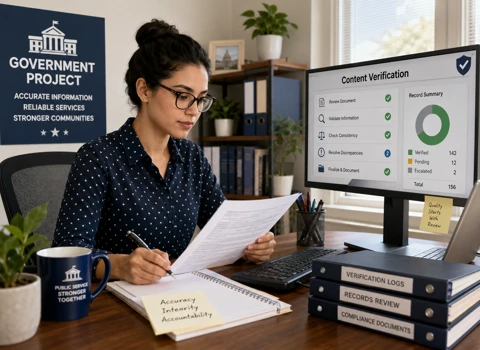
Opening for Content Verification Specialist in Government Project centers on one critical objective: making sure information used by government agencies is accurate, complete, and dependable. Public-sector organizations process enormous amounts of information every day, from citizen applications and official records to policy updates and service-related content. Before that information can be used, stored, or shared, it often requires careful review.
A Content Verification Specialist plays a key role in that process. Instead of producing new content, these professionals examine existing information, compare it against approved sources, and identify errors, omissions, or inconsistencies. Their work helps prevent inaccurate information from entering government systems and supports the delivery of reliable public services.
This position often appeals to people who enjoy detailed work, structured procedures, and solving information-related issues. Because many verification tasks are performed through secure digital platforms,
remote work opportunities have become increasingly common.
Why Information Accuracy Matters in Government Work
Government agencies rely on accurate information to operate effectively. Records, forms, public notices, and internal documents all influence decisions, services, and communications. Even a small mistake can create delays, confusion, or administrative complications.
Content Verification Specialists help reduce these risks by reviewing information before it becomes part of official records or public-facing resources. Their efforts support consistency, accountability, and trust in government operations.
Organizations typically hire professionals in this role to:
- Verify records and supporting documents
- Maintain consistency across databases and systems
- Support compliance with regulations and policies
- Improve overall information quality
- Reduce administrative mistakes
- Review content before publication
- Assist with records management initiatives
As more government services move online, the need for skilled verification professionals continues to expand.
Helping Maintain Reliable Public Records and Services
Many public programs depend on accurate information to function properly. Citizens rely on government resources when applying for services, reviewing regulations, completing forms, or accessing benefits.
A Content Verification Specialist may review:
- Public announcements and notices
- Government applications and forms
- Citizen records
- Educational and training materials
- Compliance documentation
- Eligibility requirements for programs
- Internal administrative records
By identifying issues before information is finalized, these professionals help preserve the reliability of government systems and public resources.
What a Typical Day May Involve
Most workdays revolve around reviewing information, validating records, and documenting findings. While specific assignments vary by project, the overall goal remains the same: ensuring information meets established standards.
Daily activities often include:
- Reviewing documents for completeness
- Comparing records against approved sources
- Investigating discrepancies
- Confirming compliance requirements
- Updating records when corrections are necessary
- Recording verification results
- Communicating findings to team members
- Escalating unusual cases for additional review
The role is particularly well suited to individuals who can maintain focus and accuracy while handling repetitive tasks.
Responsibilities Commonly Associated With the Position
Government projects vary in size and complexity, but several responsibilities are common across most verification roles.
Reviewing Records and Supporting Documents
A significant portion of the job involves confirming that information is accurate and supported by appropriate documentation.
Tasks may include:
- Comparing information from multiple sources
- Reviewing submitted documents
- Identifying duplicate entries
- Resolving conflicting details
- Flagging incomplete records
Supporting Quality Assurance Processes
Verification specialists often contribute to broader quality control efforts.
Examples include:
- Reviewing formatting requirements
- Checking data accuracy
- Identifying inconsistencies
- Evaluating incomplete submissions
Maintaining Verification Documentation
Government projects frequently require detailed records showing how information was reviewed and validated.
Responsibilities may involve:
- Maintaining verification logs
- Tracking updates and corrections
- Recording review outcomes
- Preparing documentation for audits
Coordinating With Other Teams
Verification work rarely happens in isolation. Specialists often communicate with multiple departments to resolve issues and clarify information.
Collaboration may involve:
- Data management teams
- Compliance personnel
- Project managers
- Administrative staff
- Government representatives
Strong communication skills help ensure efficient problem resolution.
Skills That Contribute to Success
Employers typically seek candidates who can evaluate information carefully while remaining organized and productive. Success in this role depends on a blend of technical abilities and professional judgment.
Valuable skills include:
- Attention to detail
- Critical thinking
- Research abilities
- Written communication
- Organization
- Time management
- Problem-solving
- Analytical reasoning
The Value of Careful Review
Small errors can create larger issues if they are overlooked. Effective verification specialists develop habits that allow them to examine information thoroughly rather than relying on assumptions.
Examples of issues they may uncover include:
- Incorrect dates
- Missing documents
- Conflicting information
- Formatting errors
- Incomplete records
The ability to consistently identify these problems is one of the most important strengths in this profession.
Educational Backgrounds Often Preferred
Educational requirements vary depending on the employer and project. Many organizations prefer candidates with academic backgrounds related to administration, information management, or public service.
Common fields of study include:
- Public Administration
- Political Science
- Business Administration
- Information Management
- Communications
- Legal Studies
- Public Policy
Practical experience in auditing, compliance, records management, administration, or data review can also be highly valuable.
Certifications That Can Be Helpful
Certifications are not always required, but they can strengthen a candidate's qualifications and demonstrate commitment to professional development.
Examples include:
- Data Management certifications
- Records Management certifications
- Quality Assurance training
- Governance and Compliance programs
- Information Security awareness courses
These credentials can provide a deeper understanding of industry standards and verification practices.
Technology Used in Verification Projects
Most government verification work relies heavily on digital systems and electronic records.
Common tools include:
- Document management software
- Content management systems
- Government databases
- Spreadsheet applications
- Data validation tools
- Workflow management platforms
- Reporting software
- Digital archives
Working Comfortably With Digital Systems
Advanced technical expertise is usually not required, but professionals should be comfortable learning and using technology.
Successful specialists are often able to:
- Learn new systems efficiently
- Maintain accurate electronic records
- Follow structured workflows
- Work across multiple platforms
Adaptability becomes increasingly important as government technology continues to evolve.
Remote Work in Government Verification Roles
Many government projects now support remote or hybrid work arrangements. Since much of the work involves reviewing digital records and accessing secure systems, many responsibilities can be completed from a home office.
Remote duties may include:
- Reviewing electronic documents
- Participating in virtual meetings
- Managing assignments through workflow systems
- Updating databases
- Collaborating with distributed teams
Professionals who perform well in remote environments often demonstrate:
- Self-motivation
- Accountability
- Strong communication skills
- Organization
- Effective time management
Regardless of location, confidentiality and accuracy remain top priorities.
Challenges Professionals May Encounter
Content verification requires consistency, concentration, and patience. While the work can be rewarding, it also presents challenges that professionals must manage effectively.
Common challenges include:
- Processing large volumes of information
- Meeting project deadlines
- Adapting to changing regulations
- Detecting subtle discrepancies
- Handling incomplete records
- Following updated procedures
Maintaining Both Speed and Accuracy
One of the biggest challenges is balancing productivity with precision. Employers expect reviews to be completed within established timelines, but accuracy cannot be compromised.
Many experienced specialists rely on checklists, documented procedures, and structured review methods to maintain quality standards.
Industries That Benefit From Verification Expertise
Although this role focuses on government projects, the skills developed through verification work are valuable in many sectors.
Organizations that frequently seek similar expertise include:
- Federal agencies
- State and local governments
- Public service organizations
- Regulatory authorities
- Healthcare providers
- Educational institutions
- Financial services companies
- Research organizations
- Consulting firms
- Nonprofit organizations
Experience gained in government verification can create opportunities across both public and private sectors.
Characteristics Often Seen in Successful Professionals
Certain personal traits align particularly well with the demands of verification work.
Many successful specialists are:
- Detail-oriented
- Dependable
- Ethical
- Patient
- Analytical
- Curious
- Organized
People who enjoy reviewing information, identifying inconsistencies, and maintaining quality standards often find this profession rewarding.
Career Growth and Advancement Possibilities
Experience in content verification can lead to a variety of related career opportunities. The skills developed through reviewing records, maintaining quality standards, and supporting compliance efforts are highly transferable.
Potential career paths include:
- Compliance Analyst
- Quality Assurance Specialist
- Data Quality Analyst
- Records Manager
- Information Governance Specialist
- Project Coordinator
- Regulatory Affairs Professional
- Content Operations Manager
As professionals gain experience, they may move into positions involving greater responsibility, oversight, or specialized expertise.
Continuing Professional Development
Individuals interested in long-term career growth often expand their knowledge in areas such as:
- Data management
- Regulatory compliance
- Reporting and documentation
- Project management
- Government information systems
- Professional certification programs
Continuous learning helps professionals stay current with evolving regulations, technologies, and industry expectations.
Compensation and Professional Impact
This
Opening for a Content Verification Specialist in a government project offers compensation of
$1,500 per week. The position reflects the importance of maintaining accurate information within government programs and public-facing services.
Professionals in this role contribute by:
- Reducing errors in records and documents
- Improving information quality
- Supporting compliance initiatives
- Increasing operational efficiency
- Strengthening confidence in official information
Their work helps government agencies deliver dependable services and maintain trustworthy information systems.
A Career Focused on Accuracy and Accountability
Government organizations continue to manage growing volumes of digital information, making verification work increasingly important. Accurate records support public services, regulatory compliance, planning efforts, and informed decision-making.
The
Opening for Content Verification Specialist in Government Project is a strong fit for individuals who enjoy analytical work, structured processes, and maintaining high standards of accuracy. With remote work opportunities, transferable skills, and room for advancement, it offers a practical and meaningful career path within modern government operations.