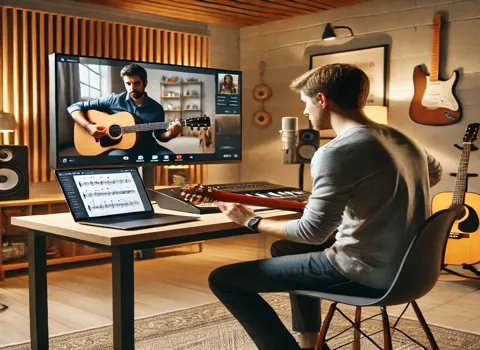
A kid picks up a guitar for the first time, or an adult finally sits down at a piano they've owned for years but never learned to play. Somewhere in that first lesson, a teacher decides whether music sticks or gets shelved again. That's the part of teaching that actually matters, and it's the same whether the lesson happens in a living room or over a screen.
We're bringing on online music instructors to teach from home, with an annual salary of
$79,000.
What the Work Looks Like
You'll teach one-on-one or small group lessons over video, covering whatever instrument or discipline you know well — guitar, piano, vocals, theory, composition, it doesn't matter which, as long as you can actually explain it clearly to someone hearing it for the first time. Some students are beginners who've never touched an instrument. Others are further along and just need someone sharper than YouTube tutorials to push them forward.
What Fills a Typical Week
- Running scheduled video lessons across whatever instruments or skill levels you teach
- Building lesson plans that actually track a student's progress instead of repeating the same material
- Giving feedback that's specific enough to be useful — not just "good job," but what to fix next
- Adjusting your teaching style depending on whether a student's seven or fifty-seven
- Keeping basic records of what's been covered so progress is easy to see over time
None of it works without patience. A missed note isn't a failure — it's the next thing to work on.
What Doesn't Show Up in the Typical Job Post
Plenty of online teaching gigs get pitched as easy extra income, and for some people, that's genuinely all it is. But the instructors who stick with this long-term are the ones who notice when a student's stuck on something and change approach instead of repeating the same explanation louder. That's really the skill being hired for here, more than any single instrument.
What You Need Coming In
Real proficiency in whatever you're teaching — enough to answer a student's odd question without scrambling. Internet that won't cut out mid-lesson, plus somewhere quiet enough to teach from — lag and background noise sink a video lesson fast. Comfort explaining things out loud, clearly, to someone who might be hearing the concept for the first time. And enough flexibility in your own schedule to actually hold consistent lesson slots, since students tend to stick around longer with instructors who show up reliably.
Helpful, Not Required
None of the following will make or break an application, but they'll help yours stand out.
- Previous teaching experience, whether in a classroom, studio, or online
- A formal music education background or relevant certifications
- Comfort teaching more than one instrument or style
- Experience working with younger students specifically, since that's a different skill than teaching adults
Support You Can Expect
You won't be building a curriculum entirely from scratch on your own. There's a platform already in place for scheduling, video lessons, and basic student tracking, along with guidance on what's worked for other instructors teaching similar material. From there, how you actually teach is yours to shape.
How the Schedule Actually Works
At Naukri Mitra, we focus on connecting the right talent with the right opportunity, and for teaching roles that means letting instructors set their own hours rather than boxing them into a fixed shift. Some instructors teach a handful of hours a week alongside other work. Others build it into something closer to full-time. Both are genuinely fine here.
Why This Might Be Worth Your Time
A lot of online teaching postings promise flexibility and leave it at that. This one's specific: a defined salary, real platform support, and students who are actually looking for instruction, not just poking around. Instructors who build a steady roster tend to get first pick of new student matches as demand grows.
Who Tends to Do Well Teaching This Way
If you'd rather adjust your explanation three different ways than repeat the same one hoping it eventually lands, that's a good sign. If you notice little progress — a chord finally clicking, a scale finally clean — and it actually means something to you, that's another. And if teaching over video doesn't feel like a lesser version of teaching in person to you, you'll probably enjoy this.
Applying
Send your resume along with a short note on your musical background and any teaching experience — a specific example of helping a student improve says more than a general list of instruments you play. Shortlisted applicants hear back directly, and the process stays short: one conversation about your background, followed by a brief sample lesson. If teaching music online, with real structure behind it, sounds like your kind of work, go ahead and apply.