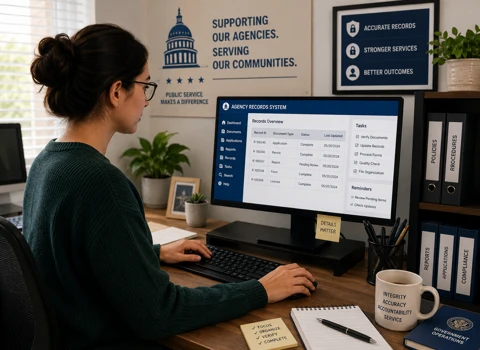
Understanding the Role of an Information Processing Specialist for Government Operations
Government agencies depend on reliable information to run programs, serve communities, and comply with regulations. An
Information Processing Specialist for Government Operations helps keep that information accurate, organized, and accessible. Although the work often happens behind the scenes, it plays a direct role in supporting public services and day-to-day agency operations.
This
remote position pays
$32 per hour and is well-suited to people who enjoy working with records, following established procedures, and paying close attention to details. The role combines administrative responsibilities with information management, making it an important part of many government departments.
Why Accurate Information Matters in Government Work
Every government office handles large amounts of data and documentation. Permit applications, benefit requests, financial records, compliance reports, and internal communications must all be processed correctly.
An
Information Processing Specialist helps ensure that records remain complete, current, and easy to locate when needed. Accurate information allows agencies to respond to requests, prepare reports, complete audits, and deliver services without unnecessary delays.
When records contain errors or missing details, the effects can spread across multiple departments. Correct information management helps reduce those problems and supports smoother operations throughout an organization.
What the Work Looks Like Day to Day
Most professionals in this role spend their time reviewing documents, updating records, and maintaining information within secure systems. The exact workload depends on the agency and the type of records being handled.
Typical responsibilities include:
- Reviewing documents for accuracy and completeness
- Entering information into databases and record systems
- Updating existing records when changes occur
- Processing forms, reports, and applications
- Checking information against agency guidelines
- Organizing electronic files and documents
- Identifying missing or inconsistent information
- Maintaining confidentiality standards
- Assisting with recordkeeping and reporting activities
- Following established information management procedures
Some days may involve processing a high volume of documents, while others focus on correcting records or responding to internal requests for information.
The Value Information Processing Specialists Bring to Agencies
Government organizations must maintain dependable records for legal, operational, and regulatory purposes. Hiring skilled information processing professionals helps agencies meet those obligations.
Their contributions often include:
- Improving record accuracy
- Supporting compliance efforts
- Assisting with audits and reviews
- Reducing administrative mistakes
- Making information easier to retrieve
- Protecting sensitive records
- Supporting reporting requirements
- Increasing workflow efficiency
As more government services move online, professionals who can manage digital records effectively continue to play an important role.
Software and Systems Commonly Used
Technology is a major part of modern information processing. Most tasks are completed through digital platforms designed to store, organize, and secure information.
Commonly used tools include:
- Electronic records management systems
- Document management software
- Government databases
- Microsoft Excel
- Microsoft Word
- Microsoft Outlook
- Data entry applications
- Workflow tracking systems
- Enterprise management platforms
- Secure cloud storage solutions
Some agencies also use specialized software developed specifically for government programs, licensing functions, or regulatory activities.
The Importance of Precision
Accuracy is one of the most important aspects of this profession. Even a minor mistake can affect reporting, processing timelines, or compliance records.
Experienced specialists often rely on habits such as:
- Reviewing entries before saving them
- Comparing records with source documents
- Following verification procedures
- Maintaining organized files
- Monitoring updates carefully
These practices help maintain confidence in the information agencies use every day.
Skills That Make a Strong Information Processing Specialist
Success in this field depends on more than technical knowledge. Several workplace skills contribute to strong performance.
Strong Attention to Detail
Professionals regularly review records where accuracy matters. The ability to spot inconsistencies, omissions, or errors is essential.
Organizational Ability
Managing large volumes of information requires a structured approach. Organized professionals can locate, update, and maintain records more efficiently.
Effective Communication
Although much of the work is independent, specialists often communicate with coworkers, supervisors, and other departments to clarify information or resolve issues.
Time Management
Government offices frequently operate under deadlines. Managing priorities effectively helps ensure work is completed on time without sacrificing quality.
Critical Thinking
Records are not always straightforward. Specialists may need to determine how to handle incomplete information while remaining within agency guidelines.
Education and Training Backgrounds
Many employers accept candidates with a high school diploma or equivalent, particularly when they have relevant office or administrative experience. Some agencies may prefer additional education depending on the complexity of the role.
Relevant fields of study include:
- Business Administration
- Public Administration
- Information Management
- Office Administration
- Records Management
- Data Management
- Government Studies
Additional education can be helpful for those interested in advancing into supervisory or specialized positions.
Certifications That Can Be Helpful
Certifications are not always required, but they can strengthen a candidate's qualifications and demonstrate professional commitment.
Examples include:
- Certified Records Manager (CRM)
- Information Governance certifications
- Microsoft Office certifications
- Data management credentials
- Public administration coursework
- Records management training programs
Continuing education can also help professionals stay informed about changing regulations and technology.
Working Remotely in Government Information Processing
Many agencies now support remote work through secure digital systems. This allows Information Processing Specialists to perform their duties from home while maintaining access to necessary records and applications.
Remote employees commonly use:
- Secure agency networks
- Virtual private networks (VPNs)
- Cloud-based document platforms
- Video meeting software
- Collaboration tools
- Electronic workflow systems
A quiet workspace, dependable internet connection, and strong organizational habits can contribute significantly to success in a remote setting.
Expectations for Remote Employees
Working from home requires a high level of responsibility. Employers generally look for individuals who can manage their workload independently while maintaining security standards.
Important qualities include:
- Self-motivation
- Reliability
- Consistent communication
- Respect for confidentiality
- Ability to follow procedures
- Strong organizational skills
Professionals who stay focused and organized often adapt well to remote government work.
Challenges You May Encounter in the Role
Like any profession, information processing comes with its own set of challenges. Understanding them can help job seekers decide whether the role matches their strengths.
Common challenges include:
- Handling large volumes of records
- Maintaining accuracy during repetitive tasks
- Working with older software systems
- Managing confidential information securely
- Meeting compliance requirements
- Resolving incomplete documentation
- Adapting to policy changes
People who approach tasks methodically and remain detail-focused are often better prepared to manage these situations.
Where These Professionals Are Employed
Although this position focuses on government operations, the skills involved are useful across many sectors.
Organizations that commonly hire Information Processing Specialists include:
- Federal agencies
- State government departments
- Local municipalities
- Public health agencies
- Transportation departments
- Educational institutions
- Social service organizations
- Regulatory agencies
- Public safety departments
- Government contractors
The experience gained in this role can also transfer to private organizations that manage extensive records and documentation.
Who Is a Good Fit for This Career?
Not everyone enjoys working with records and structured processes. However, many people find this type of work rewarding because it provides clear responsibilities and measurable results.
This career may be a strong match for individuals who:
- Enjoy organizing information
- Prefer structured work environments
- Have strong concentration skills
- Notice small details others may miss
- Value accuracy and consistency
- Work well independently
- Appreciate administrative and operational support roles
People who take satisfaction in keeping information organized often perform well in this profession.
Opportunities for Advancement
Experience as an Information Processing Specialist can open doors to a variety of positions within government administration and information management.
Possible career paths include:
- Senior Information Processing Specialist
- Records Management Coordinator
- Compliance Analyst
- Administrative Operations Specialist
- Government Program Coordinator
- Information Governance Specialist
- Data Quality Analyst
- Records Supervisor
- Operations Administrator
- Public Sector Project Coordinator
Advancement opportunities often depend on experience, performance, technical skills, and familiarity with agency procedures.
Building Additional Expertise
Professionals who continue developing their skills may qualify for broader responsibilities and leadership opportunities.
Areas that can support career growth include:
- Records management
- Information governance
- Data analytics
- Process improvement
- Government compliance
- Digital records systems
- Public administration
- Project management
Developing expertise in these areas can create opportunities in management, compliance, and specialized administrative functions.
Important Considerations for Job Seekers
An
Information Processing Specialist for Government Operations does much more than enter data into a system. The position helps agencies maintain reliable records, meet regulatory requirements, and support essential public services.
People who succeed in this role are often dependable, organized, detail-oriented, and comfortable working with technology. They understand the importance of confidentiality and recognize how accurate information contributes to effective government operations.
For those interested in administrative support, records management, and public-sector work, this remote opportunity offers a practical career path with opportunities for growth. With a pay rate of
$32 per hour, it offers an opportunity to build valuable skills while supporting the systems that help government agencies serve the public effectively.