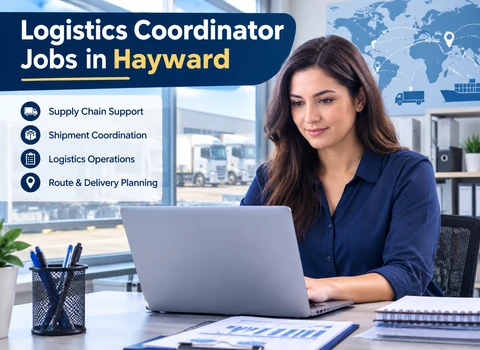
Logistics Coordinator Opportunities in Hayward | Supply Chain & Distribution Coordination
In most distribution centers, problems don’t announce themselves. They show up quietly—an invoice that doesn’t match, a truck that runs late without warning, a pallet that arrives before anyone is ready for it. This role in Hayward exists right inside that kind of movement, where things are always shifting, and someone has to keep the flow from breaking apart.
With a yearly salary of $65,000, this position is less about sitting behind systems and more about staying close to what’s actually happening on the ground. It’s about noticing small changes early enough that they don’t turn into bigger disruptions later.
Position Snapshot
Think of this as the point where incoming freight and outgoing deliveries overlap.
One hour, you might be checking why a shipment is still sitting at a transit hub. Next, you’re helping the warehouse adjust space because two deliveries landed earlier than expected.
There’s rarely a clean separation between tasks.
Inventory updates, shipment tracking, and warehouse coordination all tend to happen at the same time. And when one thing moves, something else usually needs adjusting.
That constant movement is what defines the role more than any fixed checklist ever could.
Why This Work Actually Matters
When everything runs smoothly, nobody really thinks about logistics. Orders just show up. Stock is available. The warehouse feels calm.
But the moment something slips, it becomes visible everywhere at once.
A delayed truck can throw off a full day’s schedule. A missing update can lead to wrong assumptions in inventory planning. A small misalignment can ripple through multiple departments.
This role helps reduce those ripple effects.
Not by doing everything at once, but by catching issues early and adjusting direction before things spread too far.
Sometimes that means calling a carrier to confirm timing. Sometimes it means reshuffling priorities inside the warehouse. Other times, it’s just making sure everyone is working off the same updated information.
How Your Day Usually Unfolds
There isn’t a perfect routine here, but there is a familiar rhythm that repeats in different ways.
The morning usually starts with a quick scan of shipment tracking systems. What arrived overnight? What’s still moving? What looks uncertain?
Once the warehouse picks up pace, things get more active. Dock assignments shift, incoming goods are checked against inventory records, and small timing changes begin to occur throughout the day.
ERP systems and inventory tools stay open most of the time—not as background software, but as something you keep returning to again and again.
As the day moves forward, attention gradually shifts toward outbound coordination. That might involve confirming pickup windows, adjusting freight timing, or fixing minor discrepancies in shipment details before they become bigger issues.
Some days feel steady. Others feel like a constant series of small corrections. Both are part of the job.
Skills That Actually Make a Difference Here
This role isn’t about mastering one single tool—it’s about staying steady when multiple things are happening at once.
Being comfortable with logistics coordination tools helps you stay aware of what’s moving and what’s stuck.
Experience with inventory management systems or ERP platforms makes it easier to understand how a single update can affect the rest of the chain.
But the real difference comes from how you handle attention and timing.
Noticing when something doesn’t quite match. Spotting delays before they become urgent. Keeping communication clear even when things are shifting quickly.
And then there’s communication itself—it runs through almost everything here. Whether it’s warehouse teams, carriers, or internal planners, staying aligned with people is just as important as staying aligned with data.
How Work Feels on the Ground
There is structure, but it doesn’t feel rigid or overly controlled.
Plans are always subject to change due to shipment flow, carrier delays, or sudden operational needs.
You’re rarely working in isolation. Most of the time, you’re responding to updates, passing along information, and adjusting plans with other teams in real time.
Warehouse operations, freight scheduling, and internal coordination all connect, and this role sits at the center of that connection.
It’s not about solving one big problem. It’s usually several smaller ones that need attention at different moments throughout the day.
Systems and Tools You’ll Rely On
Most of the visibility in this role comes through digital systems.
Shipment tracking tools show where goods are at any point in transit, which helps you react quickly when something changes.
ERP systems keep inventory data aligned with what’s actually happening inside the warehouse.
Warehouse coordination platforms help manage the movement of goods so incoming and outgoing flows don’t clash.
Freight scheduling tools support communication with carriers and help adjust timing when delays or changes occur.
These tools don’t make decisions for you—they just give you the information you need to make better ones.
A Real Situation You Might Handle
A shipment that’s expected early in the morning suddenly gets delayed while in transit due to unexpected road congestion.
At first, it doesn’t seem major. But once you look closer, it could affect several outbound deliveries planned for later in the day.
Instead of waiting, you check updated tracking details to confirm a new arrival estimate.
Warehouse priorities are adjusted so that available stock can be used for urgent dispatches.
Freight timing has been slightly reshaped, and internal teams have been updated so expectations stay realistic.
By the end of the day, most deliveries still go out as planned—not because nothing changed, but because the adjustment happened early enough to keep everything balanced.
Who Tends to Do Well in This Role
This role fits people who are comfortable working in motion rather than routine.
People who notice details without needing reminders. People who can stay organized even when updates come in from multiple directions. People who don’t lose focus when plans shift midstream.
It also suits those who enjoy seeing how small coordination decisions can improve a much larger system.
Over time, consistency and awareness matter more here than speed or intensity.
Final Thoughts
This role doesn’t stand in the spotlight, but it holds things together in the background.
When it’s working well, shipments arrive without confusion, warehouse teams stay aligned, and customers never see the complexity behind it all.
That quiet stability is the real value of this kind of work.
Next Steps from Here
If working in warehouse operations, freight coordination, and supply chain movement feels like a natural fit, this role in Hayward offers a steady, practical way to gain experience.
It’s the kind of position where small daily decisions quietly shape how smoothly everything runs.