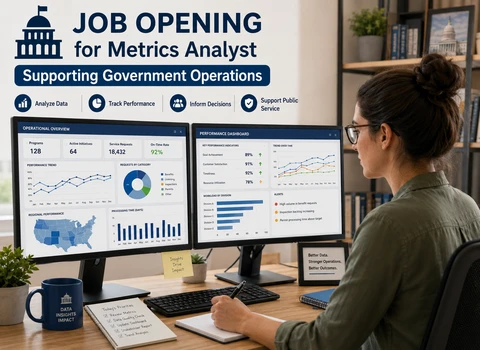
Exploring a Career as a Metrics Analyst Supporting Government Operations
Government agencies generate enormous amounts of information every day. From program performance and staffing levels to budgets and service delivery metrics, data plays a central role in how public-sector organizations operate. A Job Opening for Metrics Analyst Supporting Government Operations is designed for professionals who can make sense of that information and help leaders use it effectively.
In this
remote position, the analyst examines operational data, identifies meaningful trends, and provides insights that support planning and decision-making. Rather than simply producing reports, the role focuses on helping organizations understand what the numbers mean and how they can improve performance.
At a rate of $46 per hour, this opportunity may appeal to individuals who enjoy analytical work and want to contribute to projects connected to government programs and services.
The Growing Need for Performance Measurement
Government organizations are under constant pressure to demonstrate results, manage resources responsibly, and improve services. To accomplish these goals, leaders rely on measurable indicators that show whether programs are performing as intended.
A Metrics Analyst Supporting Government Operations helps answer questions such as:
- Are operational goals being met?
- Which processes are performing well and which need attention?
- How efficiently are resources being used?
- What trends are emerging over time?
- Where should improvement efforts be focused?
Without reliable metrics, organizations may struggle to evaluate outcomes or make informed operational decisions.
How Data Analysis Supports Government Programs
The role goes beyond gathering information. Analysts help transform raw data into useful knowledge that supports action.
Their work often contributes to:
- Monitoring organizational performance
- Measuring progress toward objectives
- Evaluating program effectiveness
- Identifying operational bottlenecks
- Supporting strategic planning efforts
- Improving reporting processes
- Providing recommendations backed by evidence
The findings produced by analysts can influence everything from staffing decisions to long-term program planning.
Daily Responsibilities in the Role
A Job Opening for Metrics Analyst Supporting Government Operations typically involves a mix of technical analysis, reporting, and collaboration with stakeholders.
Common duties include:
- Gathering data from multiple systems and databases
- Reviewing information for accuracy and completeness
- Developing performance measurement methods
- Creating reports for managers and leadership teams
- Tracking operational indicators and trends
- Building dashboards and visual reports
- Supporting compliance and audit activities
- Presenting analytical findings
- Investigating performance issues
- Recommending process improvements
Because government-related reporting often supports important decisions, precision and consistency are essential.
Looking Beyond the Numbers
One of the most valuable aspects of the position is the ability to interpret information rather than simply display it.
For instance, if a government-supported service experiences longer processing times, an analyst may examine workload levels, staffing changes, seasonal demand, and workflow processes. By connecting these factors, the analyst can help explain why performance shifted and suggest practical solutions.
This investigative approach is what turns data into actionable insight.
What Remote Work Looks Like
Many organizations that support government operations now employ remote analysts. Modern reporting tools and secure systems allow professionals to perform most responsibilities from home while staying connected with colleagues and stakeholders.
A typical day may include:
- Reviewing dashboards and performance reports
- Conducting quality checks on incoming data
- Updating metrics and reporting documents
- Participating in virtual meetings
- Performing trend analysis
- Preparing presentations for leadership
- Responding to requests for information
Remote work offers flexibility, but it also requires discipline and strong communication habits.
Professionals who succeed in remote environments are usually comfortable managing their schedules, prioritizing tasks, and collaborating through digital platforms.
Software and Tools Commonly Used
Technology is a major part of the profession. Metrics analysts use specialized tools to organize information, perform analysis, and communicate findings.
Frequently used platforms include:
- Microsoft Excel
- SQL databases
- Microsoft Power BI
- Tableau
- Google Workspace
- Business intelligence software
- Reporting applications
- Data management systems
- Statistical analysis tools
- Performance monitoring platforms
Employers may use different systems, but familiarity with data analysis and visualization tools is often expected.
Presenting Information Through Dashboards
Decision-makers rarely have time to review large spreadsheets. Visual reporting helps communicate important information quickly and clearly.
Analysts often create:
- Interactive dashboards
- KPI scorecards
- Trend charts
- Operational summaries
- Performance reports
Effective visualizations make it easier for stakeholders to identify patterns, monitor progress, and make informed decisions.
Skills That Make a Strong Metrics Analyst
Technical knowledge is important, but successful professionals also bring a range of workplace skills to the role.
Analytical Reasoning
Analysts must be able to examine complex information and identify meaningful relationships within the data.
Accuracy and Attention to Detail
Even small mistakes can affect reporting outcomes, compliance reviews, or management decisions.
Communication
A significant part of the job involves explaining findings to people who may not have technical backgrounds.
Problem-Solving
Organizations rely on analysts to investigate issues, uncover root causes, and recommend improvements.
Organization
Managing multiple reports, deadlines, and stakeholder requests requires strong organizational habits.
Objective Thinking
Good analysts base conclusions on evidence and avoid assumptions that are not supported by data.
Educational Paths Into the Profession
Many employers prefer candidates with academic backgrounds that emphasize analysis, research, or quantitative reasoning.
Common degree fields include:
- Data Analytics
- Statistics
- Mathematics
- Economics
- Computer Science
- Information Systems
- Business Administration
- Public Administration
Candidates with relevant work experience and demonstrated analytical skills may also qualify, depending on the employer's requirements.
Certifications That Can Add Value
Professional certifications can help demonstrate expertise and commitment to ongoing development.
Examples include:
- Microsoft Power BI Data Analyst
- Tableau Desktop Specialist
- Certified Analytics Professional (CAP)
- Google Data Analytics Certificate
- Lean Six Sigma credentials
- Project Management certifications
While not always required, these credentials can strengthen a candidate's qualifications.
Challenges You May Encounter
Government operations analytics presents unique challenges that differ from many private-sector roles.
Professionals often work with:
- Data from multiple sources
- Inconsistent reporting formats
- Regulatory and compliance requirements
- Tight reporting schedules
- Large and complex datasets
- Evolving performance standards
- Diverse stakeholder expectations
Success often depends on maintaining a structured approach and adapting to changing priorities.
Handling Sensitive Data
Many government-related projects involve confidential information. Analysts are expected to follow strict security and privacy standards.
Responsibilities may include:
- Protecting sensitive records
- Following data privacy regulations
- Maintaining secure access procedures
- Supporting compliance efforts
- Using approved remote work practices
Trust and confidentiality are important aspects of the role.
Organizations That Hire Metrics Analysts
A Job Opening for Metrics Analyst Supporting Government Operations can be found in a variety of sectors that support public programs and government agencies.
Examples include:
- Government contractors
- Public-sector consulting firms
- Defense organizations
- Healthcare administration companies
- Transportation agencies
- Infrastructure service providers
- Technology companies serving government clients
- Research organizations
- Program management firms
- State and local government partners
Many employers offer remote or hybrid arrangements, particularly for positions focused on reporting and analysis.
Who Is Well-Suited for This Career?
This profession tends to attract individuals who enjoy working with information and solving operational challenges.
People who often excel in the role:
- Enjoy analyzing trends and patterns
- Prefer fact-based decision-making
- Pay close attention to details
- Communicate clearly with others
- Stay organized under pressure
- Work effectively on independent tasks
- Approach problems methodically
Those who find satisfaction in uncovering insights and improving organizational performance may find the work especially rewarding.
Long-Term Career Growth
Experience as a Metrics Analyst can open doors to a variety of advanced positions in analytics, operations, and leadership.
Potential career opportunities include:
- Senior Metrics Analyst
- Business Intelligence Analyst
- Data Analyst
- Operations Analyst
- Reporting Manager
- Analytics Manager
- Program Performance Manager
- Strategic Planning Analyst
- Government Program Consultant
- Data Scientist
As professionals gain experience, they often become more involved in strategic initiatives and organizational decision-making.
Continuing Professional Development
Analytics is a field that changes rapidly as new technologies and methodologies emerge.
Professionals frequently expand their expertise in areas such as:
- Advanced SQL techniques
- Predictive analytics
- Data governance
- Artificial intelligence tools
- Machine learning concepts
- Advanced visualization methods
- Government performance frameworks
Ongoing learning helps analysts remain competitive and effective throughout their careers.
What Job Seekers Should Know
Anyone considering a Job Opening for Metrics Analyst Supporting Government Operations should understand that the position combines technical analysis, communication, and operational awareness. Producing reports is only one part of the job. Employers also expect analysts to interpret results, explain their significance, and help guide informed decisions.
For professionals who enjoy working with data and contributing to public-sector initiatives, this role offers meaningful analytical work, remote flexibility, and opportunities for advancement. The ability to convert complex information into practical insights makes Metrics Analysts valuable contributors to government operations and the organizations that support them.