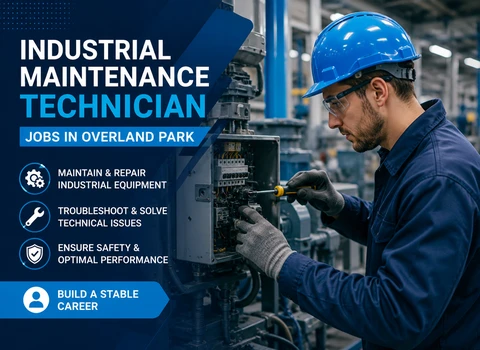
Industrial Maintenance Technician Careers in Overland Park – Keeping Production Running When It Matters Most
In a busy manufacturing setting, most people only notice the machinery when something goes wrong. A conveyor slows down, a line pauses, and suddenly the entire floor feels it. That’s usually when an Industrial Maintenance Technician steps in. In Overland Park, this role carries real responsibility—keeping equipment steady, production consistent, and downtime from spreading further than it needs to. The annual pay of $65,000 reflects the importance of that steady, behind-the-scenes work.
Inside This Opportunity
This role sits right in the middle of everything happening on the production floor. It’s not isolated work—it moves with the rhythm of the facility. One moment you’re observing how a machine is performing under load, and the next you’re opening a panel or adjusting a component that’s slightly off.
You’ll find yourself around conveyors, motors, presses, and automated systems that rarely behave exactly the same way twice in a row. Some issues are predictable, tied to wear and usage. Others show up without warning and require quick thinking before they affect the rest of the line.
There’s a constant shift between planned upkeep and unexpected fixes, especially in environments that rely on PLC-controlled equipment, hydraulics, pneumatics, and interconnected mechanical systems.
The Difference You Make
It’s easy to overlook how much depends on a machine running at the right moment. When equipment slows down or stops, everything connected to it feels the delay. Your work helps prevent that chain reaction from building.
By staying ahead of mechanical issues and responding quickly when something changes, you help keep production steady. That means fewer interruptions for operators, fewer output delays, and fewer last-minute adjustments to meet deadlines.
The impact isn’t always dramatic in the moment—but it shows up in consistency. Smooth shifts, fewer stoppages, and teams that can focus on production instead of troubleshooting problems all day.
A Closer Look at Daily Tasks
No two days follow the exact same pattern. You might start by walking through active production areas, listening and watching for anything unusual—maybe a vibration that wasn’t there before or a slight delay in a motor’s response.
From there, the day shifts depending on the equipment's needs. A conveyor may need realignment. A sensor might need recalibration. A motor could be running hotter than expected, indicating a deeper issue that needs attention before it worsens.
Preventive maintenance is a routine part—checking belts, lubricating parts, tightening fittings, and testing systems before they fail. And when something does break down, the focus shifts quickly toward figuring out what changed and restoring function without slowing everything else down.
What Makes You Effective in This Role
This kind of work depends less on theory and more on how you respond when something isn’t behaving correctly. Machines don’t always give clear answers, so you learn to read patterns—sounds, pressure changes, timing shifts, and movement inconsistencies.
Being comfortable with mechanical repair and electrical troubleshooting helps a lot. So does experience working with hydraulics, pneumatics, and automated systems controlled by PLC setups.
What really makes someone effective here is a mix of patience and curiosity. You don’t rush through problems—you trace them. You test, adjust, and verify until the system behaves the way it should again.
How Tasks Flow in This Role
Work doesn’t happen in a straight line. It moves with production needs. Some tasks are planned ahead and built into maintenance schedules. Others appear suddenly when a machine starts acting differently or stops altogether.
You’ll often shift between independent work and quick coordination with operators or supervisors. They see the machines in motion, and you use that feedback to understand what’s happening behind the scenes.
Safety is always present in how tasks are approached. It shapes how you inspect, repair, and restart equipment. Nothing moves forward without making sure conditions are stable and controlled.
Your Work Toolkit
The tools in this role are a mix of hands-on equipment and digital systems that help track performance. You’ll regularly use standard mechanical tools, diagnostic instruments, and calibration devices to inspect and repair machinery.
On the digital side, maintenance tracking systems help log issues, schedule upkeep, and monitor patterns in equipment behavior over time. PLC interfaces and diagnostic software also come into play when working with automated systems that need deeper analysis.
Together, these tools help you stay ahead of problems instead of reacting only after production is already affected.
A Short Workplace Story
During a normal production shift, a packaging conveyor begins to slow down just enough to catch attention, but doesn’t stop completely. Instead of shutting everything down, you start by observing how the system is behaving in real time.
Something feels off in the airflow driving a pneumatic actuator. After isolating that section, you find a worn valve causing inconsistent pressure. Once replaced, the system stabilizes, and the conveyor returns to normal speed within minutes.
The line continues running, and most people on the floor only notice that the delay has disappeared. That’s often how this work feels—small decisions in the moment that prevent larger interruptions later.
Who Will Succeed Here
This role fits people who prefer working with their hands and understanding how machines actually function. It’s for those who stay calm when something breaks and enjoy figuring out what’s really going on beneath the surface.
You’ll likely enjoy this work if you like problem-solving in real time, don’t mind shifting priorities during the day, and feel comfortable moving between routine maintenance and unexpected repairs.
It’s not about rushing—it’s about staying steady, noticing details, and fixing things in a way that lasts.
Your Next Move
Industrial Maintenance Technicians play a quiet but essential role in keeping production environments stable. In Overland Park, this position offers hands-on technical work, constant learning on real equipment, and the satisfaction of keeping operations running without unnecessary interruptions.
If working close to machinery, solving practical problems, and ensuring production doesn’t lose momentum sound like the right kind of work, this role offers a solid and meaningful path forward.