A Closer Look at the Hiring Background Screening Specialist for the Government Vendor Project Role
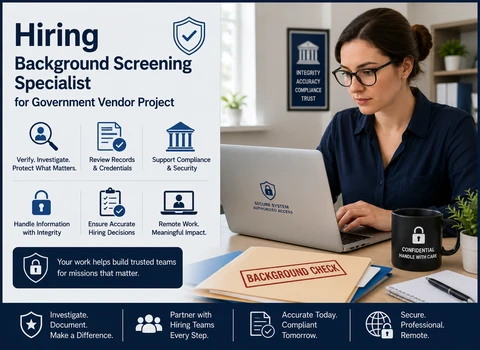
The Hiring Background Screening Specialist for the Government Vendor Project position sits at the intersection of hiring, compliance, and risk management. Organizations that support government agencies need to know that the people they hire meet specific standards, and that responsibility often falls to background screening professionals.
In this role, the specialist reviews applicant information, verifies credentials, investigates discrepancies, and helps ensure hiring decisions are supported by accurate records. The work is especially important for government-related contracts, where security requirements and regulatory obligations can be stricter than in many private-sector positions.
Remote opportunities have become increasingly common because much of the work involves reviewing digital records, communicating with institutions, and managing screening cases through secure online systems.
People who enjoy research, documentation, and detail-oriented work often find this profession to be a strong fit.
Why Government Vendors Invest in Thorough Screening
Government contractors face unique responsibilities. Employees may have access to sensitive information, secure facilities, public resources, or systems that require a high level of trust.
Because of this, organizations cannot rely solely on information provided in a résumé or application. They need professionals who can verify facts and identify potential concerns before a hiring decision is finalized.
A Hiring Background Screening Specialist for Government Vendor Project helps organizations:
- Confirm employment history
- Verify educational achievements
- Review criminal background information
- Validate licenses and certifications
- Confirm identity records
- Support compliance requirements
- Maintain documentation for audits
- Reduce hiring-related risks
Strong screening practices help organizations meet contractual obligations while protecting both operational and security interests.
What the Workday Typically Looks Like
No two days are exactly alike, but most specialists spend their time reviewing records, conducting verifications, and managing active screening cases.
Common activities include:
- Reviewing new screening requests
- Gathering required authorization forms
- Launching background checks
- Contacting employers and schools
- Reviewing returned reports
- Investigating inconsistencies
- Updating case notes
- Communicating with recruiters and hiring teams
- Following up on missing information
- Maintaining secure records
The role requires concentration and consistency. Small details can have a significant impact on the outcome of a screening review.
Working With Confidential Information
Privacy is a major part of the job.
Background screening specialists routinely handle information such as:
- Government-issued identification details
- Employment records
- Educational transcripts and credentials
- Criminal history reports
- Licensing information
- Compliance-related documentation
Protecting sensitive data is not optional. Professionals in this field are expected to follow company policies, legal requirements, and security procedures at all times.
How a Background Investigation Moves Through the Process
Many job seekers are curious about what happens after they authorize a background check. The process involves several steps, each requiring careful review.
Receiving and Reviewing the Request
The specialist begins by examining the screening request and confirming that all required forms and permissions have been submitted correctly.
Conducting Verifications
Information supplied by the applicant is compared against official records. This may involve contacting employers, educational institutions, licensing boards, or other authorized sources.
Evaluating Findings
Once reports are returned, the specialist reviews them for completeness and accuracy. Any discrepancies may require additional investigation.
Recording Results
Every action and finding must be documented clearly. Accurate records support hiring decisions and help organizations demonstrate compliance during audits or reviews.
Because government vendor projects often involve strict standards, precision throughout the process is essential.
Skills That Make a Strong Screening Specialist
Success in this profession depends on more than simply checking records. Employers look for individuals who can analyze information, communicate effectively, and maintain accuracy under pressure.
Valuable skills include:
- Attention to detail
- Investigative thinking
- Written communication
- Organization
- Time management
- Critical analysis
- Problem-solving
- Documentation accuracy
- Confidentiality awareness
- Regulatory compliance knowledge
Professionals who can spot inconsistencies quickly while maintaining a high level of accuracy are often highly valued.
The Importance of Communication
Although much of the work is research-based, communication plays a larger role than many people expect.
A specialist may interact with:
- Job applicants
- Recruiters
- Human resources departments
- Government contractors
- Universities and colleges
- Former employers
- Licensing agencies
Clear communication helps resolve questions, obtain missing information, and keep hiring timelines on track.
Education and Credentials Employers Often Prefer
Educational requirements vary by employer. Some organizations hire candidates with a high school diploma and relevant experience, while others prefer applicants with college-level education.
Common educational backgrounds include:
- Criminal justice
- Human resources
- Business administration
- Public administration
- Legal studies
- Information systems
Practical experience in compliance, investigations, recruiting support, or administrative work can also be valuable.
Certifications That May Be Helpful
While certifications are not always required, they can strengthen a candidate's qualifications.
Examples include:
- Professional Background Screening Association (PBSA) certifications
- Human resources certifications
- Compliance-focused credentials
- Privacy and data protection certifications
The relevance of a certification often depends on the employer and the nature of the government contract being supported.
Technology Used in Modern Screening Operations
Background screening today relies heavily on digital tools and secure systems.
A Hiring Background Screening Specialist for a Government Vendor Project may regularly use:
- Applicant tracking systems (ATS)
- Human resource information systems (HRIS)
- Background screening software
- Case management platforms
- Identity verification tools
- Secure document repositories
- Compliance databases
- Communication and collaboration software
Technology helps streamline investigations, but human judgment remains a critical part of the process.
Software Knowledge That Can Be Useful
Many employers appreciate candidates who are comfortable working with:
- Microsoft Excel
- Microsoft Word
- Microsoft Outlook
- Reporting applications
- Workflow management tools
- Data entry systems
Being able to learn new software quickly is often just as important as prior experience with a specific platform.
Challenges Commonly Faced in the Role
Like many compliance-focused careers, background screening comes with its own set of challenges.
Professionals may encounter:
- Missing applicant information
- Delays from schools or employers
- Tight project deadlines
- Complex government requirements
- Large screening volumes
- Conflicting records
- Strict confidentiality expectations
The ability to stay organized and methodical is especially important when managing multiple investigations simultaneously.
Finding the Right Balance Between Speed and Accuracy
Hiring teams often want results quickly, particularly when projects are understaffed or operating under strict timelines.
At the same time, incomplete reviews can create compliance risks.
Experienced specialists learn how to work efficiently without sacrificing accuracy, ensuring that investigations remain thorough and reliable.
Remote Work in the Background Screening Field
One reason this profession adapts well to
remote work is that many responsibilities can be completed electronically.
Remote specialists often spend their day:
- Reviewing digital documents
- Conducting online research
- Managing screening cases
- Communicating through email and secure platforms
- Preparing reports
- Coordinating with hiring teams
Organizations typically provide secure systems designed to protect sensitive information.
What Employers Expect From Remote Professionals
Successful remote employees generally demonstrate:
- Strong self-discipline
- Dependability
- Effective time management
- Attention to security procedures
- Professional communication skills
- Ability to work independently
Because government-related information may be involved, employers often enforce strict security and confidentiality standards.
Industries Where These Skills Are in Demand
Although government vendor projects are a major source of employment, the skills developed in this role are useful across many sectors.
Employers commonly hiring screening specialists include:
- Government contractors
- Defense organizations
- Healthcare providers
- Financial institutions
- Technology companies
- Transportation firms
- Educational organizations
- Security companies
- Human resources service providers
- Consulting firms
Any industry with significant compliance requirements may need professionals who can accurately verify applicant information.
Who Usually Excels in This Type of Work?
The role tends to appeal to people who enjoy structured processes and investigative tasks.
Traits often associated with success include:
- Curiosity
- Patience
- Integrity
- Reliability
- Professional judgment
- Strong ethics
- Detail orientation
- Persistence
Individuals who enjoy solving information gaps and validating facts often find the work both engaging and meaningful.
How This Role Differs From Traditional Human Resources
While background screening specialists frequently collaborate with HR departments, their responsibilities are more specialized.
Rather than focusing on employee relations, benefits, or workforce planning, they concentrate on verification, compliance, documentation, and hiring risk assessment.
Opportunities for Growth and Advancement
Experience as a Hiring Background Screening Specialist for a Government Vendor Project can open doors to several related career paths.
Potential advancement opportunities include:
- Senior Background Screening Specialist
- Screening Operations Lead
- Compliance Analyst
- Risk Management Specialist
- Human Resources Compliance Manager
- Security Clearance Coordinator
- Government Contract Compliance Specialist
- Investigations Manager
Professionals who develop expertise in regulations, audits, and compliance processes often find opportunities to move into leadership or specialized compliance roles.
Continuing Professional Development
The regulatory landscape changes regularly, particularly in areas involving privacy, employment law, and government contracting.
Professionals who continue learning may expand their expertise in:
- Employment regulations
- Government contract compliance
- Data privacy requirements
- Risk management practices
- Security clearance procedures
- Audit preparation
Ongoing education helps professionals remain effective and competitive throughout their careers.
Compensation and Professional Expectations
Compensation for a remote Hiring Background Screening Specialist for a Government Vendor Project can vary based on experience, employer requirements, project complexity, and geographic considerations.
For this position, the advertised pay rate is
$36 per hour.
When evaluating an opportunity, candidates should also consider factors such as remote work flexibility, organizational culture, compliance responsibilities, advancement potential, and access to professional development resources.
Professionals who consistently demonstrate accuracy, discretion, sound judgment, and a strong understanding of compliance requirements often become trusted contributors within government contracting environments and other highly regulated industries.