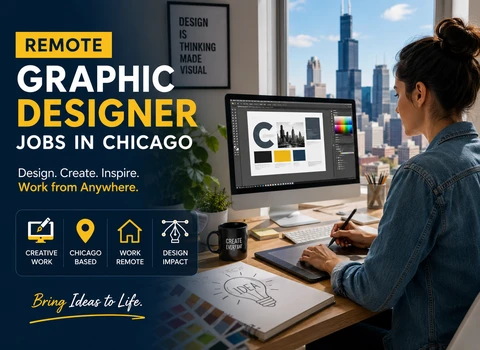
Graphic Designer Careers in Chicago – Creative Visual Design Opportunity
Understanding This Role
Chicago’s creative scene doesn’t stand still. Walk through the city, and you’ll see design everywhere—on trains, in storefronts, on screens that never go dark. This Graphic Designer role sits right inside that movement, where visuals quietly shape how people notice, remember, and respond to brands.
It’s less about decoration and more about communication. A layout can shift perception. A color choice can change the mood. Even a small spacing decision can make something feel more polished or more approachable. That’s the kind of thinking this role leans on every day.
With a yearly salary of $75,000, the position offers a stable foundation for someone working as a graphic designer in Chicago, while still leaving room for creative experimentation. The work flows between digital marketing visuals, branding design, and print design projects that reach real audiences in real time.
Contribution to the Bigger Picture
Design work here is not isolated. It connects directly to how businesses show up in the world.
A strong visual identity can help a small brand feel established. A weak one can make even great ideas go unnoticed. That gap is where this role matters most.
Through branding design, campaign visuals, and ongoing creative support, the work helps businesses communicate more clearly. It also supports digital marketing efforts, ensuring campaigns don’t just exist—they actually get attention.
In many ways, this role becomes part of how companies build trust. Not through words, but through consistency, structure, and visual clarity that people pick up on without even realizing it.
What Fills Your Workday
No two days follow a strict pattern, and that’s part of the rhythm.
Some mornings begin with refining social media graphics for a live campaign. Later, attention shifts to UI/UX design elements for a digital product or to adjusting typography in a print layout that needs to feel more balanced. There are days when quick edits matter, and others when a full creative direction needs to be shaped from scratch.
Adobe Creative Suite becomes a constant companion—Photoshop for image work, Illustrator for vector graphics, and InDesign for structured layouts. Between tools and feedback cycles, the work moves back and forth between exploration and precision.
Deadlines sit in the background, but the focus stays on clarity. Every visual decision is tied to how it will be experienced by someone on the other side.
What You Bring to the Role
Strong design work usually starts with observation.
An understanding of typography helps guide readability. A sense of composition shapes how attention moves across a layout. Familiarity with color theory brings emotional direction into visuals without saying a word.
Experience with branding design and visual identity systems helps maintain consistency across different platforms. Whether it’s a social post or a print design piece, the work needs to feel connected.
Comfort with Adobe Creative Suite is expected, but just as important is the ability to take feedback without losing the core idea. Good design often comes from revision, not just the first version.
A growing understanding of UI/UX design also adds value, especially as more visuals now live within digital experiences rather than in static formats.
The Nature of This Work Setup
This role doesn’t operate in isolation. It works best in motion, surrounded by other creative and strategic minds.
Design requests come from marketing teams, content writers, and product leads. Each one brings a different perspective, and part of the work involves finding common ground between them.
Communication stays practical and direct. Feedback is expected, not avoided. A concept might shift direction after review, and that adjustment often leads to stronger outcomes.
There’s structure, but not rigidity. Enough clarity to stay aligned, enough flexibility to explore ideas before locking them in.
Your Work Toolkit
The foundation of the workflow is built on familiar tools, but how they’re used makes the difference.
Adobe Creative Suite handles most of the heavy lifting—image editing, layout design, and vector creation all happen there. Figma may be used when projects move into collaborative UI UX design work.
Project tracking tools help keep timelines visible, especially when multiple campaigns overlap. Cloud storage ensures that design files, brand assets, and revisions stay accessible without confusion.
Typography libraries and brand guidelines often guide decisions, especially in larger branding design systems where consistency matters across everything from digital ads to print design materials.
How This Work Plays Out in Reality
A retail brand in Chicago is preparing for a seasonal push. The products are strong, the message is clear, but the visuals aren’t landing the way they should.
The initial designs feel safe—clean, but forgettable. Something needs to shift.
The approach changes. The layout becomes more dynamic. Typography is adjusted to feel more current. Colors are updated to match a younger audience while still respecting the brand’s identity.
After a few rounds of refinement, the campaign finally clicks. Once it goes live across digital marketing channels and store displays, engagement starts to change. People notice it. The brand feels more alive.
That outcome isn’t the result of one big idea—it comes from a series of small design decisions stacking up in the right direction.
The Kind of Person Who Does Well Here
This role tends to suit people who think visually before they think verbally.
There’s comfort in working through iterations, adjusting layouts, and refining ideas rather than chasing perfection on the first try. Curiosity matters more than rigid style. The willingness to experiment matters more than sticking to one approach.
It also helps to enjoy collaboration. Many of the strongest ideas come from conversations, not solo work. Someone who listens, adapts, and refines their thinking in response to feedback usually grows quickly in this environment.
Over time, this role becomes less about software and more about judgment—knowing what feels right for a brand and its audience.
Why Consider This Opportunity
A Graphic Designer role in Chicago offers more than steady work—it places you inside a fast-moving creative environment where design decisions carry real weight.
A $75,000 annual salary supports both career stability and creative development. More importantly, it provides space to shape branding, design, visual identity systems, and digital marketing assets that people interact with every day.
If the goal is to grow in a graphic designer role in Chicago while working across typography, print design, and UI/UX, this opportunity is well-positioned to help build that path over time.