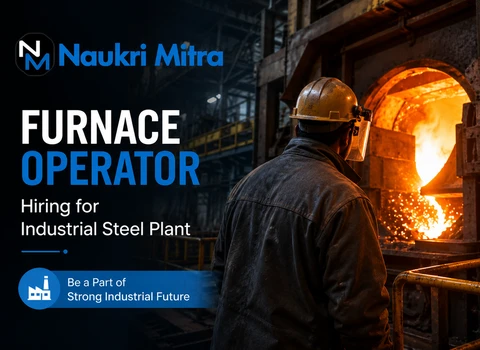
Life Around the Furnace: What This Job Really Involves
Ask anyone who has spent time in a steel plant, and they'll tell you the furnace section has its own rhythm. Heat, noise, glowing metal, constant checking of gauges — it's a job that rewards attention and punishes carelessness. This guide looks at what it means to work as a Furnace Operator at an industrial steel plant in Angul, Odisha, India, and what someone considering this line of work should expect.
Angul sits in a part of Odisha that has become known for its metal and mineral processing units. That's not an accident — the region has the raw materials and infrastructure to support large-scale steel and metal industries, and with that comes a steady need for people who know how to run and monitor furnace equipment.
Why This Role Exists in the First Place
Melting metal isn't something you can leave to guesswork. Iron ore, scrap, or sponge iron needs to reach the right temperature at the right rate, and someone has to monitor the process closely. If the furnace runs too hot or too cold, or the timing is off, the batch can be ruined, costing the plant time and money. That's the reason this position keeps coming up in hiring — not because it's easy to automate, but because judgment still matters here.
A Shift on the Floor
No two shifts look identical, but there's a pattern to how the work usually unfolds. It starts with checking the furnace readings from the previous shift, confirming fuel or power supply is stable, and running through basic safety checks before anything else happens.
From there, the job involves:
Loading raw material based on what's scheduled for that batch. Keeping an eye on temperature and pressure readings throughout the melt. Making small adjustments to airflow or fuel as conditions change. Logging what happened during the shift so the next team and the supervisors know exactly where things stand. Working alongside helpers when it's time to charge the furnace or tap out molten metal.
Steel plants rarely stop running, which means shift work — mornings, evenings, sometimes nights — is part of the deal here.
Equipment You'll Actually Be Handling
The specific setup varies by plant. Some rely on induction furnaces, others use electric arc furnaces, and larger operations may operate blast furnaces. What remains fairly constant is the presence of control panels, temperature sensors, ladles for handling molten metal, and material-charging equipment. Basic hand tools come in for smaller adjustments and routine checks. As more plants shift toward digital monitoring, being comfortable with control screens rather than relying solely on manual dials is becoming a real advantage.
What Employers Tend to Prefer
There's no single path into this work, but certain backgrounds help. An ITI in Electrician, Fitter, or a similar mechanical trade is commonly accepted for entry-level positions. Diploma holders in Metallurgy or Mechanical Engineering sometimes get considered for roles with more responsibility, particularly if there's room to move into supervision later on.
Beyond paper qualifications, what tends to separate a good operator from an average one is simpler than people expect — reading a gauge correctly without second-guessing it, noticing when something looks off before it becomes a problem, and sticking to the procedure even when it feels slower than a shortcut would be.
The Physical Side Nobody Talks About Enough
This isn't desk work. You're on your feet for long stretches, near equipment that produces intense heat, and the noise level in most furnace sections is constant. Some fumes are unavoidable depending on the process. People who do well here usually have decent stamina and don't mind a loud, warm environment for most of the shift.
Staying Safe Around Molten Metal
There isn't much room for shortcuts when it comes to safety. Heat-resistant gloves, goggles, a helmet, protective aprons, and proper safety footwear are standard for anyone working near the furnace. Lockout-tagout procedures matter more here than in most factory settings, and any equipment fault — even a minor one — needs to be flagged right away rather than worked around.
Where the Role Can Lead
Operators who stay in this line of work for a few years often move up to senior operator roles, shift-in-charge positions, or eventually furnace supervisor roles. The path tends to reward consistency and reliability over flashy skills, since plants value people who show up, follow procedure, and know the equipment inside out.
Pay and What Comes With It
This is a full-time role based in Angul, Odisha, India, with a monthly salary of ₹35,800. Depending on the employer, additional benefits such as overtime pay, PF, ESI, uniforms, or canteen access may also be included with the position, though these vary from one company to another.