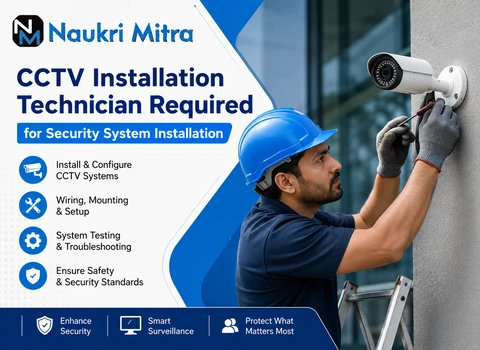
What a CCTV Installation Technician Actually Does
Walk into almost any new office building, gated society, or retail store in Gurugram today, and you'll spot cameras tucked into corners, above entrances, near cash counters. Someone had to put those there, wire them correctly, and get them talking to a recorder. That's the job. A CCTV Installation Technician mounts cameras, runs cable, sets up the recording device, and ensures the footage is usable when someone needs to check it later. This is a Full-time role based in Gurugram, Haryana, India, paying ₹26000 a month, and it's a decent entry point into the broader security and electronics field.
Why Companies Keep Hiring for This
Cameras don't secure anything by themselves. A camera pointed at the wrong angle, or one connected loosely, is basically useless the moment something actually happens. Builders, shop owners, RWAs, and factory managers know this, which is why they'd rather pay someone who knows what they're doing than risk a shaky DIY job. Poor installation can lead to blind spots, grainy footage, or a system that stops recording after a power cut that nobody noticed. That's the gap this role fills.
How the Day Usually Goes
Mornings start with checking the site list and making sure the van or toolkit has what's needed — cameras, connectors, cable, a drill, maybe a spare power adapter. On arrival, the technician first walks the property. Where does the client want coverage? Are there ceiling voids to run cable through, or will it be surface-mounted along the wall? Once that's settled, drilling and mounting begin, followed by cabling, then connecting everything back to the DVR or NVR. The last hour or two usually go into testing — checking that night vision actually kicks in, confirming that motion alerts fire, and making sure the client can pull up the feed on their phone before the technician leaves.
The Work That Fills Most Days
- Fixing dome, bullet, or PTZ cameras at agreed spots
- Running and terminating cable, whether coaxial or Ethernet
- Setting up the DVR/NVR and connecting the hard disk
- Getting IP addresses and network settings right so remote viewing works
- Testing recording, playback, and alerts before signing off
- Showing the client how to use the app or software, since most people forget within a week if it isn't explained clearly
Where the Work Actually Happens
No two sites look the same. One day it might be a three-bedroom flat needing four cameras; the next, a warehouse in an industrial belt needing full-perimeter coverage tied to a single control room. Retail stores usually want cameras near billing counters and entrances. Under-construction buildings sometimes need a temporary setup just to keep an eye on material stacked on-site overnight. Corporate offices tend to be the most detailed jobs, since they often combine CCTV with access control and need proper cable management, not just a camera stuck on a wall.
Tools You'll Actually Use
Nothing exotic — a drill machine, crimping tool, cable tester, multimeter, a sturdy ladder, and a basic screwdriver-and-clamp set cover most days. Knowing your way around BNC connectors and RJ45 terminations matters more than people expect, since a badly crimped connector is one of the most common reasons a camera "just stops working" a week later. A laptop or phone is used constantly too, mostly for configuring the recorder or checking network settings once everything's physically installed.
Skills That Separate a Good Technician from an Average One
Drilling holes and pulling cable is the easy part, honestly. What actually matters is understanding basic electrical safety, having a working grasp of networking (even at a basic level), and knowing how to read a floor plan well enough to identify where blind spots will appear. Troubleshooting matters a lot too — a camera showing no signal could be a bad crimp, a faulty port, or a power issue, and figuring out which one it is quickly saves a lot of time. Patience helps as well. Ceiling voids are tight, clients change their minds about camera placement mid-installation, and sometimes an image just won't look right until you've adjusted it three or four times.
Who Tends to Do Well in This Line of Work
ITI candidates from electrical or electronics backgrounds fit naturally here, and so do diploma holders in electronics or computer hardware. Freshers are welcome too, provided they're willing to learn under someone more experienced for the first few months. Technicians who've already handled a few CCTV projects or who understand basic networking usually get trusted with independent site visits sooner. Formal education helps, but much of the hiring in this trade still comes down to whether someone can actually wire things correctly and troubleshoot without hand-holding.
What the Body Goes Through
This isn't a desk job. Expect to climb ladders often, work with your arms raised for extended stretches while fixing cameras overhead, and occasionally squeeze through a false ceiling to route cable where it needs to go. Carrying tool bags between floors adds up over the course of a day. Since this is Full-time work, technicians should expect a regular week of site visits, sometimes starting early if a commercial client wants installation done before their store opens for business.
Safety Isn't Optional Here
Working at height near live electrical points isn't something to take lightly, even after doing it for years. Ladders need to be stable before anyone climbs them; power should be switched off before working near an outlet; and loose cables near power lines are a habit worth avoiding entirely. Safety shoes and gloves are standard, and a harness becomes necessary on taller structures. Construction sites usually have their own safety protocols on top of this, and following them isn't negotiable, whatever the deadline pressure looks like.
What Tends to Go Wrong on Site
Older buildings often lack proper cable ducting, so you have to improvise a route that still looks reasonably clean. Long cable runs can weaken a signal, especially in bigger properties. Clients sometimes ask to move a camera halfway through installation, which throws off the whole cabling plan. Outdoor work gets delayed by rain. And every so often, an older recorder just won't play nice with a newer camera model, which means troubleshooting a compatibility issue nobody warned you about that morning. None of this is unusual — it's just part of the trade.
Where This Can Lead
Most people start as a junior installer and, with a couple of years of steady site experience, move into handling installations independently or supervising a small team across multiple locations. Gaining more knowledge of IP cameras, video management software, or access control integration tends to open doors to system design or project coordination work within the security industry. Technology keeps changing, so technicians who stay curious about newer camera systems and software tend to remain relevant longer than those who don't.
Salary and What Else Might Come With It
This Full-time position in Gurugram, Haryana pays ₹26000 per month. Beyond the salary, some employers offer extras like overtime for longer site days, PF and ESI coverage, uniforms, transport support for far-off sites, or canteen facilities — though these vary from one company to another and are worth confirming directly during the hiring conversation rather than assuming they're included.