📚 Table of Contents
- Introduction
- Freelancers Thriving Through Hybrid Approaches
- Balancing Online Reach with Local Presence
- Simple First Steps to Try
- Addressing Real Freelancer Struggles
- Everyday Analogies Freelancers Understand
- Keeping It Real and Practical
- Essential Tools and Skills for Hybrid Freelancing
- Why Hybrid Freelancing is the Future
- Practical Roadmap to Begin
- Wrapping Up: Your Next Steps
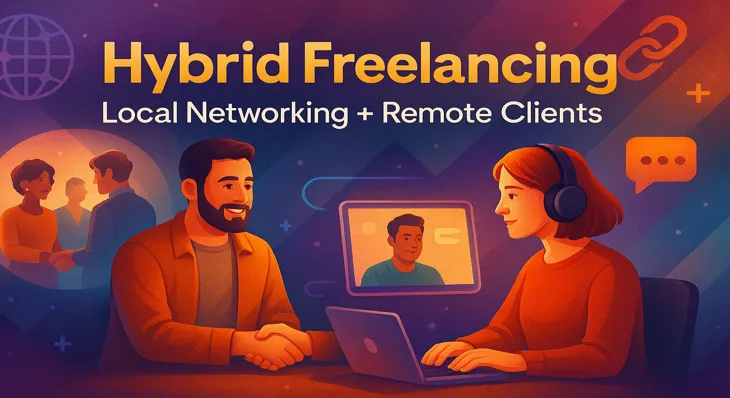
Hybrid Freelancing: Local Networking + Remote Clients
Introduction
Have you ever felt stuck choosing between building local connections and chasing global opportunities online? It’s a real struggle for many freelancers. You want freedom to work anywhere, yet still value face-to-face connections. The good news? You don’t actually have to pick one over the other. Hybrid freelancing: local networking + remote clients is the sweet spot that lets you enjoy the best of both worlds. Consider this: joining local coworking spaces, attending community events for freelancers, and building relationships in your neighborhood can open unexpected doors. At the same time, using online freelancing marketplaces and remote client management tools helps you reach clients across the globe. In this approach, you expand your professional network while maintaining your independence. This blended style also supports a healthier work-life balance for freelancers. You get human interaction when you need it, plus quiet focus time when working remotely. It’s about creating a career that feels flexible, human, and rewarding.Freelancers Thriving Through Hybrid Approaches
Let’s bring this idea to life with a real example. Priya, a graphic designer from Pune, started her journey with online freelancing marketplaces. She quickly found clients abroad but felt isolated at home. She missed brainstorming sessions, casual chats, and the creative buzz of working around others. So, she joined local coworking spaces and began attending community events for freelancers in her city. Suddenly, projects started coming her way through referrals, and she built long-term partnerships by collaborating with people she met locally. At the same time, she continued to use freelance networking platforms to connect with international clients. Priya’s story demonstrates how combining collaboration with remote teams and in-person networking fosters a steady pipeline of opportunities. By combining both, she not only expanded her portfolio but also avoided burnout.Balancing Online Reach with Local Presence
Ever wondered why some freelancers skyrocket in their careers while others struggle to stay afloat? The difference often lies in connections. Some find work solely through online freelancing marketplaces, while others thrive by cultivating in-person relationships. The process doesn’t need to feel overwhelming. Both strategies have limits. Relying only on digital tools may leave you feeling isolated. Depending solely on in-person networking may restrict your reach. So, what’s the answer? A balanced mix. And with simple networking strategies for freelancers, you can make both channels work together.Simple First Steps to Try
Freelancing isn’t always easy. You’ve got deadlines, clients from different time zones, and endless emails. The process doesn’t need to feel overwhelming. Start small. Consider attending a local networking event this month. Sign up for one online marketplace this week. Use both channels to test what works for you. Take it one step at a time and build momentum gradually.Addressing Real Freelancer Struggles
We know the doubts you face:- Feeling overwhelmed trying to juggle multiple clients.
- Miscommunication during remote project collaboration.
- Anxiety about attending new networking events.
Everyday Analogies Freelancers Understand
Hybrid freelancing is a lot like exam prep—you need multiple sources, not just one. Notes, practice tests, and group discussions all come together to help you succeed. Similarly, freelancers can combine **digital marketing **with in-person conversations at events. Both complement each other. It’s like fitness: solo runs build stamina, but group classes spark motivation and new ideas. That’s precisely what personal brand development feels like—online strategies give reach, while local connections build trust.- Exam preparation = multiple strategies.
- Fitness training = a balance between solo and group training.
- Career building = mixing digital and in-person branding.
Keeping It Real and Practical
Here, you’ll dive into practical tips and examples that actually make sense in your day-to-day freelancing. You won’t find cookie-cutter tips here—just practical, real-world strategies to help you succeed.Essential Tools and Skills for Hybrid Freelancing
To succeed in this space, you’ll need a mix of personal and professional skills. Hybrid freelancing thrives on adaptability.- Freelance networking platforms: Use them wisely to expand your reach without overloading yourself.
- Remote client management tools: Essential for staying organized and maintaining smooth communication.
- Time management for hybrid workers: Balance local meetups with remote project deadlines.
- Professional Branding for Freelancers: Present yourself consistently across both online and offline channels.
Why Hybrid Freelancing is the Future
Hybrid freelancing is more than just a short-term fix. It’s shaping the future of independent work. As businesses grow more comfortable with outsourcing and flexible hiring, freelancers who balance collaboration with remote teams and in-person relationships will stand out as indispensable. Think about it: by honing networking strategies for freelancers and developing strong client relationship-building habits, you set yourself apart. Insights from platforms like Naukri Mitra show that hybrid professionals often command higher rates because they bring both local trust and global reach. Utilizing advanced remote client management tools further enhances their efficiency and credibility.Practical Roadmap to Begin
If you’re wondering where to begin, here’s a roadmap:- Start local – Attend community events for freelancers or join a nearby coworking hub.
- Create your online presence – Sign up on online freelancing marketplaces with a clear, compelling profile.
- Build your toolkit – Use remote client management tools to stay efficient and professional.
- Balance your calendar – Prioritize both online work and offline networking with effective time management for hybrid workers, and refine your networking strategies for freelancers.
- Develop your brand – Invest in personal brand development by combining digital efforts with face-to-face authenticity.